
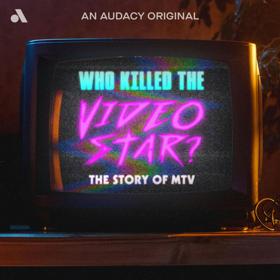
Introducing: Who Killed The Video Star: The Story of MTV
2024-03-26 00:02:20
For nearly four decades MTV defined youth culture -- today it's a shell of its former self. What happened? How did MTV build a brand that stayed relevant to young viewers for decades, just to throw it all away? Who Killed the Video Star is a new 8-episode Audacy original about the rise and fall of MTV hosted by former MTV VJ, Dave Holmes.
We sat there and just watched MTV videos for hours, transfixed, because there had never been anything like this. The idea about MTV was that it got you, as nothing else in the culture did. It was the internet before it was the internet. You sit in front of that TV and it was time. It was like my time to commune with other young people.
My name is Dave Holmes. I used to work at MTV. I was a VJ, a video jockey. Back, when MTV still played music videos. To me and so many others, MTV was a profoundly important thing.
It represented the dawn of a new era, a 24-hour music video channel that would change the face of television and pop culture as we knew it.
I want my MTV, you know. That was what it meant to be a part of US youth culture in the 80s, period. I mean, it was everything. It was the center of the cultural universe. It really was.
And I am not overstating that.
At the beginning, it was like a cultural rocket ship.
They put the videos on the air and ratings just shoot through the roof. MTV was on the cover of Time magazine. There was literally nothing hotter in pop culture at that point.
But artists and record labels couldn't make videos fast enough. So MTV had to get creative.
Part of the brand was that we have to change all the time. We can't stand in one place too long. The spring breaks were really the first evidence that people wanted to see themselves on TV. MTV saw that they could have success with the real world. MTV just didn't get heavy into reality.
because they wanted to get heavy into reality. They were seeing ratings success.
To keep up with an ever-changing media landscape, the network had to adapt. But another revolution was on the horizon, and this time, MTV wasn't leading it.
I remember hearing from kids, oh, I don't watch that. That's like my older brother's network. I watch YouTube. MTV was YouTube and TikTok and Spotify and Twitter all wrapped into one. All roads led through MTV.
Join me each week as we try to answer the question, if video killed the radio star, who killed the video star?
Follow and listen to Who Killed the Video Star? The Story of MTV, on the free Odyssey app or wherever you get your podcasts.
v1.0.0.260408-1-0df11e2_os