
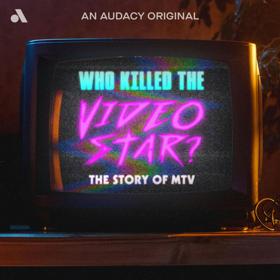
Who Killed the Video Star: The Story of MTV | We Have Liftoff
2024-03-27 00:35:45
For nearly four decades MTV defined youth culture -- today it's a shell of its former self. What happened? How did MTV build a brand that stayed relevant to young viewers for decades, just to throw it all away? Who Killed the Video Star is a new 8-episode Audacy original about the rise and fall of MTV hosted by former MTV VJ, Dave Holmes.
It's any afternoon in the mid-1980s. We're in a suburban living room or a finished basement, plaid sofa, shag carpet. Maybe we're in a school uniform. Maybe we're in a Benetton rugby shirt and an acid-washed jean. Maybe we're having a homemade iced tea.
Or maybe we're sipping on a cold glass bottle of Pepsi-Cola, because we are a new generation. The details will vary from teenager to teenager, but what's on the TV won't. What we're watching is MTV.
We sat there and just watched MTV videos for hours, transfixed because there had never been.
anything like this.
The idea about MTV was that it got you, as nothing else in the culture did.
MTV launched in 1981 with the song and video, Video Killed the Radio Star by The Buggles. Video killed the radio star. That song was a shot across the bow, a message that a new age was dawning. An age that would be sexier, more colorful, younger, faster.
It moved ten times as fast as anything else on normal television.
And you kind of lived there. It was a place to go and a place to be in a home base.
You just would sit and wait for your favorites to come on, and that's all you wanted to do.
When it launched, MTV Music Television was all music videos, 24 hours a day. It was intended to be rock and roll radio for your eyes. What it became was the epicenter of American popular culture.
I want my MTV, you know. That was what it meant to be a part of U.S. youth culture in the 80s, period.
MTV gave a new generation of pop musicians another dimension, a new way to express themselves.
We knew that, if anything, the 80s was going to be in color, and it was going to be televised.
It was radio and television at the same time. It was TikTok and YouTube and Twitter. It was everything. You wanted, your MTV. I mean, it was everything.
It was the center of the cultural universe.
It really was.
And I am not overstating that. It was the internet before. it was the internet. Like you sit in front of that TV, and it was time.
It was like my time to commune with other young people. A whole generation parked itself in front of MTV. A few generations, actually. At a time when we were all aware of the same rock bands and pop songs and movie stars, MTV was the one single network that decided what those things would be.
MTV was my jam. I watched it all the time. I took my music cues from there. You would just put it on on a loop.
MTV was the monolithic pop culture brand of the time, when there was a monolithic pop culture.
Unfortunately, 36 years after launching, MTV News is done. MTV felt like it would never die. But then people used to say rock and roll will never die. And here we are in the 2020s, and MTV and rock and roll seem pretty mortal. I think we've gone through an entire generation that has no idea really what MTV was or the impact, or cares.
I've got two teenagers, and they don't watch television. They get everything from their phone.
In 2023, MTV News was shut down completely. Next up, MTV News.
After 36 years, the iconic news program signing off for good. The cancellation is part of massive layoffs at Paramount.
That's sad that that's going on. MTV as a cable network is still around, and it's still profitable, but it basically just plays one single show.
MTV has left an indelible mark on youth culture, but at some point, you find MTV t-shirts in five below.
My name is Dave Holmes, and, like millions of people, I grew up watching MTV, and then I actually ended up working there. So I've talked to some of the people I met along the way. And a whole bunch more people I've always wanted to meet. And we're going to talk about the network and how it evolved into a force that changed music and movies and fashion and even American politics. And together, we'll try to answer the question, what happened?
How did MTV build a brand that stayed relevant to young viewers for decades, and how did it throw it all away? And if video killed the radio star, who killed the video star?
Hey, I'm Rhett. And I'm Link. Maybe you know us from our daily YouTube show, Good Mythical Morning.
But this is a little trailer for our podcast, Ear Biscuits, where two lifelong friends talk about life for a long time. And nothing is off limits.
We talk about our sex lives, our mental health journeys, but we try to never take ourselves too seriously.
So we invite you to not do the same, or to do the same. We invite you to listen. Follow and listen to Ear Biscuits. Now for free on the Odyssey app and everywhere you get your podcasts.
Before we get into MTV's origin story, we ought to talk about what the television landscape looked like before it. It was pretty grim. I lived it, and it's even hard for me to believe. There was a time, and it wasn't that long ago, before streaming, before DVDs, before even a home VCR was affordable for the average American, when nothing was on demand.
If you were going to watch primetime TV, you had three options, and that was it. Choice, and opportunity was severely limited.
That is Chris Connolly. He would go on to be a writer for Rolling Stone, a founding editor of Premier Magazine, and later a producer and correspondent for MTV News. But in the 70s, Connolly was a young person in New York City. And if you were a young person anywhere in the 70s, there was nothing on TV.
There were three networks. There was ABC, NBC, and CBS. And they dominated the landscape in a way that's impossible for today's viewer to imagine. If you were in a big city, there were a handful of other independent stations covering the stations 2 to 13,, and maybe they would show sitcoms or local news programming. Maybe they had the local sports teams on.
That was it.
By the late 70s and early 80s, more young people than ever were being raised by working parents. Hundreds of thousands of American children became what was called latchkey kids, meaning they went home after school, they let themselves in, and they were more or less alone until their parents got home from work. And because the idea of scheduling every minute of a child's life hadn't been invented yet, a lot of those kids spent that time parked in front of the television. And there was not a lot for them to watch.
To try to explain what the dominance of mainstream culture was like back then, the way that youth culture was barely acknowledged to exist, it might be hard for today's viewer to understand. Even though the marketplace had spoken, and youth culture was the engine behind everything that was being sold or played or talked about, it had to claw its way to get on primetime at all.
If you're under the age of about 35, you've had television made for you at every stage of your life. You had Teletubbies for when you were 1 to 4 years old. You had Nick Jr. before you were old enough for Nickelodeon. Disney Kids before you aged into the Disney Channel.
By the time you made it to high school, you had aged into and out of about 12 different television demographics. And now that I think about it, if you're under 30, you may never have watched television on television at all. But for those of us a little older who relied on the television, it was big bird right into Bob Hope. And if you were in the 15 to 20 year period of your life when neither of those things spoke to you, well, tough. There was no popular music on television in America at all.
But that wasn't the case everywhere.
British bands always relied on the television to sell themselves.
That is Gary Kemp. He and his band, Spandau Ballet, would end up on MTV a lot in the 80s. He was a kid in the 60s and 70s in the UK, where young pop artists understood the power of television. One case in point, the biggest rock and roll band of all time. Ladies and gentlemen, The Beatles!
The Beatles on Ed Sullivan, that moment is so historic that The Beatles went from being a big band here to not really happening in America to actually skyrocketing because of the Ed Sullivan show.
In the 70s, like most British kids, one night a week, Gary was in front of the TV, watching the top 40 singles chart get counted down on Top of the Pops.
Top of the Pops was on every Thursday night, and it was the biggest TV show in the UK. Your granny knew what number one was. But on there, you'd get such diversity of acts. So you might get Cliff Richard at one point, or someone singing a comedy song. And then you'd have T-Rex, you know, or you'd have David doing Starman.
Which, you know, changed a lot of our lives when we saw him with that short, spiky hair, drape his arm around Mick Ronson's shoulder with his painted nails, and there was something androgynous that would upset the parents.
At that time, 13-year-olds in America, who wanted some visuals to go along with their music, had pretty much no choices. Here again is writer Chris Connolly.
You know, something like SNL, something like Saturday Night Live, came out of nowhere, you know, and was really the sole oasis for something like that. In terms of music that you could see on television, it was the Midnight Special on NBC, again airing late at night, where you could watch some of the bands that you were familiar with from the radio. It was Don Kirshner's rock concert, which, in some cases, would air after that, and you could see those. That was pretty much what you could expect to get in terms of contemporary music or youth culture being represented on mainstream television.
And if you turned on American radio in 1980, the situation was not a whole lot better. Now, on with America's Top Ten and our Pop Spotlight Song of the Week. It's one of the Top Ten on Billboard's Pop Singles Chart.
And here they are, an Australian group with a great song called Lost in Love.
Things were much more colorful in the UK. Now, once in a while, an artist would have a song on the UK charts, which would give them the opportunity to be on Top of the Pops, but they'd be on tour or in the studio or too busy exploring their sexuality to be able to make it to the studio. So to be there without being there, they would make a thing called a music video.
Mostly Top of the Pops was bands going on miming to their songs, right? Because you couldn't trust the BBC to get the sound right, and there were a lot of acts on, and you're just selling your single. That's what you're doing. So you're miming. But I remember that Bohemian Rhapsody had a video.
And then there were some late 70s ones, weren't there? You know, like, I think, Heart of Glass, Blondie. It was sort of early attempts at videos.
In the US, there was really no place for these early attempts at videos to be seen. So now we come to a rare example of corporate America doing something good for the culture. American Express had paired with Time Warner to create the joint media company Warner Amex. And they wanted to use the power of television to attract a new demographic of potential new cardholders, the 18 to 24 audience. An up-and-coming Warner Amex executive named John Lack knew how important that demo was.
He was just barely out of it himself. He also knew that nobody was doing a particularly good job of advertising to that demographic.
So the first person who really put forward the idea of MTV was John Lack.
That's Rob Tannenbaum. He's the co-writer of the definitive oral history of the network, I Want My MTV.
In November of 79, a little less than two years before the launch, John Lack goes to the first-ever Billboard magazine video music conference. Lack was a very good salesman. He was a good-looking man. He was just old enough to command respect, but young enough that old people thought he must be hip. He was smooth and well-spoken, and articulate and convincing.
And he got up and made this presentation about this idea that became MTV. Didn't have a name yet.
Now, from today's perspective, we know MTV cannot miss. It's a network whose entire lineup is essentially commercials. A network where record companies could promote their artists for the price of a music video. A jackpot for everyone involved. But also, from today's perspective, we know that sometimes the bigwigs of corporate America don't take too easily to new and risky ideas.
John Lack was going to have to fight this battle on two fronts. He'd have to convince the record labels to give him their music. And he'd have to convince Warner Amex to give him the money to launch the network. And after that initial presentation to the music industry, the outlook was not so good.
And after he was finished, Sidney Sheinberg, who was the president of MCA, one of the biggest entertainment companies in the world, stands up and says, we ain't giving you our fucking music. So that was the initial response. And, you know, they were walking uphill. First, let me say this. This business model, it's not even a business model.
It's just flat-out chutzpah. The idea is, hi, we're MTV. We're going to sell advertising on a product that you are going to give us for free. that costs you money to make. What?
Who ever heard of such a thing? They were offering? what we now know is called a platform. And we love platforms. We value platforms.
But it was not valued in the music business. The MTV argument was, hey, listen, you give records for free to radio stations, which was a decent argument, except they're not exactly parallel, because record companies don't have to go press an album just to give it to the radio station. They've already made the album. Videos are an extra expense.
So John Lack did not have the music industry behind him at first. He knew he had a good idea, but he still needed the money to execute it. So he pleaded his case to the Warner Amex board, specifically to an executive named Jack Schneider.
John Lack's presentation to the board was, they don't have anything. There wasn't programming for that age group. Half of the audience for Saturday Night Live was older than 34.. So if you were trying to reach 34 and under, you were wasting half of your money by advertising on Saturday Night Live. It's an advertising-driven business.
And initially, the board said no. They said, no, forget it. And then he went back and asked again with Jack Schneider. And somebody on the board said, after hearing the presentation, said, all right, Jack, what do you think? Should we do this?
And Lack says he kicked Schneider under the table. And I gave him a you-better-say-yes look. And Schneider did say yes. So they got their $25 million.
When MTV was gearing up to start, there were not a lot of places on American television to show music videos. And because of that, there weren't a lot of music videos. And a not small percentage of the ones that did exist were by Rod Stewart.
And there was a really significant leap of faith on the part of the people who started this network. And the leap of faith was, we're going to start off with these videos and then they're going to give us more. Because if they don't, then the whole thing falls apart.
Now, to fill airtime and to give the network its personality, they would need friendly faces for the viewers to click with. As radio had disc jockeys, or DJs, MTV was going to need on-air talent to break up the Rod Stewart. These people would be called video jockeys. VJs.
I was a struggling actor in New York just trying to get a gig.
That is Alan Hunter. Today we know him as one of the five original MTV VJs. But at the time, he was another thing that doesn't exist anymore. A young bohemian in New York City.
I had just gotten through doing a new wave punk rock version of Shakespeare's Midsummer Night's Dream in the Lower East Side. And then I did a David Bowie video. You know, I was in fashion. And got paid 50 bucks a day for a couple of days and got to meet David Bowie. How cool was that?
One day, a network called MTV called Alan in for an interview. Along with an NYU senior who was just finishing up her internship at AM radio station WNYC. Her name was Martha Quinn.
Martha and I were the last to be hired. And I think they were just desperate, to be honest. So I came down to the studio. It appeared to be a happening, you know, moneyed event. Amex was behind it, Warner Communications.
But I did a horrible interview. And I did that three times in a row over a period of about a week. And they hired me. I mean, why, I don't know. They were coming down to the wire.
They had hired J.
J.
, you know, the credible, street-savvy guy who had great credentials. Mark Goodman, obviously huge in the business. And Nina Blackwood, the beauty. And then they needed the boy next door. And the girl next door.
And they got both of us, Martha and myself.
Alan and Martha got hired in July. And they had three weeks to prepare for MTV's launch.
I thought, great, now I can pay my rent, sure. Gave me $500 cash in an envelope. And I went to Macy's and got a lot of sale clothes. And went to work. So I didn't stop my night job at the bartending gig.
By day, I would go and do MTV and try to explain to people what I was doing. But, you know, cable in 1981 was tantamount to, you know, a porno show or a crank call show. They didn't have a clue. So, yeah, it was a dizzying, head-spinning thing to happen. But who knew it was going to take off?
T-minus 10.
9,, 8, 7,.
6, 5, 4.
. We've gone for main engine start.
We have.
MTV's broadcast began on August 1st, 1981.
. Viewers at the time were greeted with footage of a rocket launching into space, followed by introductions from MTV's first VJ, Mark Goodman, and the other four.
Ladies and gentlemen, rock and roll.
It was epic. I hear it was epic. I didn't watch it. A lot of people didn't watch it.
By the time MTV was on the air, you know, we weren't getting it in New York.
At first, cable television existed to bring television to the rural parts of America, places that were too far out from the cities to get decent reception. It was cheaper to connect the rural areas, for a lot of reasons. There were government subsidies aimed at improving the country's communication infrastructure, and it was just easier to lay the wire out in the sticks than it was in the dense and complicated cities. New York was one of the last places to get their MTV.
You know, people think it was like a sitcom, that it was an immediate smash hit, and it wasn't. It was a slow-growing thing. And you couldn't explain it to anybody. You know, two and a half million people could see MTV across the country. That's how many homes were passed with MTV.
So, none of my friends believed I had a job, except I had some nice new clothes.
Warner Amex had invested $25 million in MTV. But in those early days, and maybe this is because they knew they were too old to interfere with it, the bigwigs kept their hands off and let the kids run the show.
It really was by naivete. MTV was started with duct tape and no knowledge of how to do it. I mean, the only people that knew what they were doing when the production of MTV started were the stagehands and the camera people at the production facilities. These were union dudes who knew how to do it, and everybody else, producers and directors and talent, had no effing clue.
One of the big executives and decision-makers at the dawn of MTV was Bob Pitman, a former radio executive from Mississippi. Like a lot of the people who would go on to be big executives and decision-makers at MTV, Pitman was young. 27. And, like a lot of people who would go on to make great television at MTV, Pitman had never done television. He didn't really know how to make it properly, and that didn't matter.
He knew that if MTV was going to succeed, it was going to have to look and feel nothing like what had come before it.
Every day was an experiment. Every day I'd look at a FICA plant behind me on the set, and the next day it'd be gone. It'd be over there. Because Bob Pitman said, I don't like the FICA's plant. It looks too conservative.
Or, don't read the script anymore. Let's don't have scripted news. Just ad lib. And then I started doing cart wheels, and then it was just like, let's explode the medium. Look, man, I would do a cart wheel and literally break the teleprompter.
You know, I'd smash the glass on the front of the teleprompter and hopped up and went, well, here's the next video. And I got a note from Bob Pitman that said, magic. That's what I want to see.
The magic was being made in New York City, and the reality was that New York City wasn't wired for cable. Because the print media world was also largely based in New York City, the writers who wanted to write about it couldn't see it. So the network started to invite journalists into the studio to watch the magic being made. Journalists like Rolling Stone's Chris Connolly.
Well, I mean, they would bring us onto the set every now and then. I think they were shooting the VJ segments, you know, in the West's 30s in Manhattan, in a small little studio. And so you'd see JJ or Martha, or, you know, one of those folks talking to people. And so that was cool. So you knew at least they were talking to people who knew what they were talking about.
In those.
early days, with only a couple million households that even got cable, and music and television journalists who couldn't see it, MTV was not exactly a sure thing. Nobody.
thought this was going to work. Bob Pitman, who ran programming at MTV, said to us, yeah, it seemed like an asinine idea. There were about 50 people who believed that MTV could succeed, and all 50 of them worked at MTV.
For the first year or so of MTV, there was another problem. The big American rock bands of the time, your Styx, your REO Speedwagon, your Journey, they did some rudimentary videos. They would license the network some of their live shows. They were there. But, as Chris Connolly and the staff of Rolling Stone observed, they weren't.
exciting. In the view of our guys, you couldn't put REO Speedwagon on the cover of Rolling Stone. You couldn't put Styx on the cover of Rolling Stone. You couldn't put Journey on the cover of Rolling Stone. They weren't like the Rolling Stones.
They weren't like the Who. They weren't as recognizable or as galvanizing in terms of their appeal as those guys were. You had the Pretenders. You had Blondie. You had a couple of bands from that era that could sort of break through.
But Who, as individuals, are going to kick up the kind of intrigue that's always driven exciting music.
A trip abroad in the very early 80s from a rock journalist, whose name you're definitely going to be hearing more later on, turned up something unexpected. Rock seemed to be dead. Punk was passé. But something new was brewing. And it had an awesome.
wardrobe. Kurt Loder went to England for a couple of weeks for Rolling Stone to report on the new scene that was happening there. And what he came back with totally sort of transformed my grade school understanding of what the new thing was going to be. It's like, we'd all like Sex Pistols, The Clash, Elvis, all those guys. We lived and died with those guys.
They were amazing. And Kurt came back and he was saying things like, everybody wants to dress like Dirk Bogart. now. This is a totally different thing. These are like the kids of Bowie and the kids of Roxy Music.
And they've been influenced by what they call Tom La Motown. And this is what they live for.
Gary Kemp and his band, Spandau Ballet, were among these kids, making music that was a little harder to define.
Well, British radio was also very eclectic. It wasn't like being in America, where everything was sort of separated. It was a mix of every single thing that might be in the charts. I think that eclecticism that was sort of forced upon us really helped to create, I think, really interesting acts and British bands that came out of the late 70s, early 80s.
These were dressy looking guys and women who were doing that kind of music, and it was very different from what had gone before. The whole vibe was different, but it was really resonating in a way that radio hadn't gotten their heads around yet. This huge wave of English bands, bands who tumble out of your mouth as you look back on it now, but they were knocking at the door and they couldn't get in. Spandau Ballet doing To Cut A Long Story Short. That sounded like a hit.
That sounded like an amazing hit song. You didn't hear that on the radio. To cut a long story short.
I lost my mind.
In 1981, you didn't hear Spandau Ballet on American radio. But like their contemporaries in the UK, they understood the importance of being seen. So, for To Cut A Long Story Short, their first single, they made a music video.
Our whole raison d'etre was to try and do things differently, and to do things with a lot of visual content. It was something that we wanted to do, because it suited our image. So it's us playing the song, dressed in a completely wild way, which is the way we looked in those days, in the London dungeons, with some kids, that we got from one of our clubs to do this slow jive. that was very happening at the time, and we thought would reveal to the world this new youth cult.
MTV had 24 hours a day to fill with music videos. And again, he's great, but there's only so much Rod Stewart a person can take. So, to cut a long story short, MTV and early 80s British New Wave became a perfect match.
So there was just all this exciting music that we were hearing, because we were at a magazine and stuff, and because we were in New York, but you wouldn't hear it if you turned on any of the radio stations that were popular back then. However, if you went on MTV, now, here were these artists showing you what they were capable of. If you imagine how uninteresting the landscape was if you were a young person, how it didn't meet your needs, there. it was. All these great-looking young people, men and women, you know, in this exciting visual environment, playing exciting pop music.
Like, that's the story of the second part of the 20th century in terms of pop culture, right?
So, even with new bands and videos to play, MTV was still a little bit shaky. On the one side, cable companies were still unsure about including it in their channel lineups. Rock & Roll was still, to a lot of the country, the devil's music. And on the other side, record executives like Sid Sheinberg from earlier in this episode, still weren't completely sure why they should give MTV their fucking music. Here again is Rob Tannenbaum.
MTV had.
been on the air for about a year, and they felt like it was working and they were having some success, but the record companies were giving them a hard time. That was the bottleneck. So MTV decides that the only way they're really going to get the record companies to play ball, not just give them new videos, but also invest a significant amount of money in the videos so that they'll look better. The only way they'll do that is if we show them that we're selling records.
A trip outside of the cultural bubble of New York City gave MTV's executives exactly what they were looking for.
So a couple of the executives were dispatched to a couple of cities where MTV had been on the air for a while. One of them was Tulsa, Oklahoma. And they go and they visit with the local AOR director, FM rock radio director, and like, yeah, we're still playing Tom Sawyer. Yeah, it still tests well for us. So why should we play anything different?
And then they go to a record store. Okay, so tell us, what's selling? And the record store clerks are saying to them, there's this band called Duran Something, and we can't keep their records in stock. Well, there's only one way that kids in Tulsa, Oklahoma were hearing and seeing, which is really the important part, especially with Duran Duran. Hearing and seeing Duran Duran, that was on MTV.
So if Duran records were selling in Tulsa, it was because of MTV.
Gary Kemp and Spandau Ballet toured the United States in 1982, and from the stage, Gary could tell which American cities had gotten their MTV.
When we very first went to America, I have to say I was kind of surprised at how behind in the fashion everyone was. But what we noticed is, if we'd go to a state that had MTV, the kids there all knew us. They were all buzzed about us. They were all looking like their British style. And we definitely noticed that there was a sense of communication between Britain and America because of MTV.
It was like a gas pipeline that run under the ocean, and it was feeding British kids to American kids.
And it wasn't until they showed the direct positive correlation between exposure on MTV and record sales that the record companies bent over. At that point, they just bent over. It went very quickly from, we're not giving you our fucking videos, to, oh, please, sir, will you play this more than five times a day?
The early ratings for MTV were not real high. The network's early adopters were a small audience, but they were committed. They watched all day, often in groups. And then they went to the store and bought the records of the brand new artists they were seeing. They called their radio stations and requested their music.
For an example of how the sound of the American pop charts changed, and how quickly it changed, let's rewind a couple years. Let's go back to the UK in 1980.. Philip Oakey is the lead singer of a band called The Human League. The Human League is very new wave. They're so MTV ready, they already have a full-time director of visuals in the band to do slideshows while they play.
But right now, Oakey's in trouble. Synth player Martin Ware has just left to start his own band, Heaven 17.. The Human League has nobody to handle the high parts and the harmonies. The band is incomplete. And they're under contract to do a European tour.
Oakey has to act fast. At a nightclub in Sheffield called the Crazy Daisy, Oakey sees two teenage girls dancing together. They look great. Now, I was not there, but from what I understand, the conversation goes a little like this. Oakey walks right up and says, Join my band as dancers and backup singers.
Their names are Susan Sully and Joanne Catherall, and they say, We have never sung or danced professionally. We have never been on a stage or in a recording studio. Like ever. He says, I don't care. The tour starts in two weeks.
Are you in? About a year and a half later, on July 4th weekend of 1982, Don't You Want Me? by The Human League, with vocals by Philip Oakey and Susan Sully, who a year and a half ago had never sung professionally, goes to number one on the American charts. Thanks to a good looking video, they got played on a network run by people who had never done television before. Don't you want me, baby.
Don't you want me, Oh?
The MTV era had officially begun. And the job that Alan Hunter's friends didn't believe was real, was suddenly the coolest job in the world.
The first half year, we could live a fairly anonymous life. We could live and eat and breathe in New York and go to work every day. And then, when it started to become available in the town I was living in, then it was really interesting to be recognized. And I was always caught off guard when someone would say, hey, are you that guy? I'd go, why is he staring me down?
And my wife at the time started saying, they see you on MTV. Like, oh, I got it.
By the end of 1982, some British bands were getting a goose in their record sales. The sound of the radio was changing. The VJs were getting good tables at restaurants. But as for MTV as a network...
They weren't making any money for the entire first year. MTV not only didn't make money, they were just bleeding cash. You didn't see commercials that whole first year. in between the songs and in between the graphics and my bit. You saw no ads for Pepsi or jeans, because they weren't selling any advertising.
Nobody bought anything. I'm telling you, they were just bleeding cash.
In our next episode, we'll find out what happened that saved MTV from becoming a flash in the pan.
Who killed the video star? The Story of MTV is written and narrated by me, Dave Holmes. Executive, produced by Jenna Weiss Berman, Dave Holmes, Jim Weber, and Chris Cowan. Our story editor is Maddy Sprung-Kaiser. Produced by Lloyd Lockridge, Ian Mont, and Terrence Malone.
Edited, mixed, and mastered by Chris Basil. Production support by Javier Cruces. Special thanks to J.D. Crowley, Maura Curran, Leah Reese, Dennis, Josephina Francis, Kurt Courtney, Allison Jeffrey, and Hilary Schuff. Who killed the video star?
The Story of MTV is an Odyssey original.
Hi, I'm PJ Vogt, here to tell you about my new podcast, Search Engine. Search Engine was one of the very best new podcasts of 2023. According to Vulture, Vogue, Time Magazine, and The Economist, we answer fascinating questions about business, tech, and history. Questions like, why are drug dealers putting fentanyl on everything? Who should be in charge of artificial intelligence?
How did ADHD medication get so popular so fast? Listen and follow Search Engine with PJ Vogt and Odyssey podcast, available now on the Odyssey app or wherever you get your podcasts.
v1.0.0.260408-1-0df11e2_os