

EXCLUSIVE PEEK: Reflections on Bette Midler
2024-05-08 00:10:03
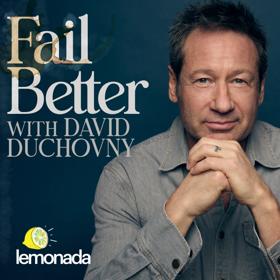
<p>To be human is to fail – period. And not just to fail once, but to fail a lot. As the author Samuel Beckett said: “Fail again. Fail better.” This saying means a lot to me and my family – so much so that my daughter got a tattoo of it. Why are we, and so many others, so deeply concerned by failure? And if it’s something we all do so often, why are we so afraid of it – especially those of us here in win-at-all-costs America? In this podcast, I sit down with successful, thoughtful people like Ben Stiller, Bette Midler, Sean Penn and more to talk about failure – or what they labeled “failure,” but what was really an unparalleled opportunity for growth and revelation. I even want to delve into my own hardest moments, when I wrestled with setbacks, shame, and fear. We’ll still fail again. And again. But maybe if we fail better, we’ll feel better -- and maybe if we can all laugh together in failure, that's a start.</p>
This message is brought to you by the Coligard test. The Coligard test is a non-invasive, effective, and affordable prescription, use-at-home colon cancer screening test that looks for both abnormal DNA and blood in your stool. So if you're 45 or older and at average risk, ask your healthcare provider about screening for colon cancer with the Coligard test. You can also request a Coligard prescription today at coligard.com slash podcast. Do not use Coligard.
if you have had adenomas, have inflammatory bowel disease, and certain hereditary syndromes or a personal or family history of colorectal cancer. False positive and negative results may occur. Any positive results should be followed by a colonoscopy, not a replacement for a colonoscopy. in high-risk patients. The Coligard test is available by prescription only.
Hi, Fail, Better listeners. You can get even more of the show each week with Lemonada Premium. Today, we are giving you a free preview of what you might hear, where David reflects on his interview with Bette Midler. If you like what you hear, subscribe now and Apple Podcasts.
Here's another episode of Fail Better Premium. Each week, subscribers get to hear an extended version of my personal reflections on my most recent interview. Here you go.
Just some random voice memo thoughts about the Bette Midler interview, because I'm still afraid of the technology over there on the table. I'm just going to hold my phone near my mouth. I can trust that. You can hear some street noises for free.
Yeah, the thing, like to me,
she just hasn't, like in sports, like you, talk about somebody's motor, and it's just like somebody who never seems to get tired, you know, they can just play all day. They got a big motor and Bette to me, she's got a big motor, you know, and just, it's still firing, you know, now, and she may not be, you know, doing as much professionally, but the motor is still there. The motor is still firing, and it's the, what I said about enthusiasm, you know, being Greek, Greek derived, you know, for having God within you and in the, who would be, you know, theocratic God, a state of being, maybe.
So yeah, just really impressed by her enthusiasm and in a way, envious, you know, when she said she was an optimist and I said I was a pessimist and I was like, God damn it, I wish, I, I wish I had that enthusiasm, you know, towards optimism. And I feel like I understood what she was saying about always knowing. She had a knowing that she was, had something to say, something to express, some talent to share. And I related to that. And I think I have felt that way too, you know, not, obviously not in any way similar to Bette, but there was something in me always that thought, mm, I've got something to put out there and it's going to be recognized as having some kind of value at some point.
And it's hard to say it without arrogance, you know, it's hard to not sound arrogant when you say something like that. But I will say that it gets you through periods of failure. It got me through tons of rejections. when I first was acting. My first manager, Melanie Green, used to tell people how many shows I auditioned for.
And I used to get, you know, he's not right for our TV show. He's a movie star. And I'd be like, yeah, I ain't a movie star. I can't pay my rent. And so that was one way I get rejected.
But I knew, I knew there was something I was doing, even though I'd get, you know, he's flat, he's a low affect or whatever. But I knew inside I was feeling, inside I was expressing, and that they'd catch up. Somehow they'd catch up. And I think, talking to Bette, I was put in touch with that in myself again. You know, that young part of myself where I'd quit graduate school and I was in my late 20s and didn't have a career, and all of a sudden I was acting, a fairly soft-spoken, shy-seeming person.
People very confused, especially my family, why is David doing this? And yet I had this knowing, as my friend Jason Begay says, a knowingness about what I had.
So I'm talking about me after Bette, but what I feel that I missed, and again, I feel bad about this, was getting into failures as a parent, as a mom, as a spouse. And I don't like pushing on those buttons because I don't want, I'm not looking for people to confess sins or,
you know, that's not what this is about to me. But I know that failures, you know, are legion in one's personal life, so we gotta go there. And I think I missed, I missed the spots with Bette about getting into that. And I think why I'm so interested in it and why I'm surprised that I didn't press or prod or take the time was,
it's two-part. It's like, what I wanted to ask Bette was, what is failure like after success? Is it different from the failure when you're starting out? What was the failure of Bette like compared to, maybe the rejection? when you're young?
When you're guarding something, you're guarding this career, and then the failure, it's different from guarding nothing. I got nothing to lose. Failure, okay, well, I didn't lose anything, just an audition. And then it's like, oh, I've got this thing, Bette Midler, and now this failure is jeopardizing that. Does it feel that way?
Is the failure different? But again, to get into the personal failures of family, parenting, spouse, and also the hurt of whatever our parents did to us. She clearly touched on her father as not giving approval, and her mother is almost like a living in a Hollywood world, way out there in Honolulu. So very interesting place that she came from, created her mind, fascinating, I find, and beautiful. And what a reaction that she created, almost in opposition and in love with those two parents that she had.
And I guess I wanted to ask, how did that affect your parenting if you grew up with a father who didn't easily give approval or applause? What kind of a mother were you? Even saying that out loud right now, I don't like myself, what kind of a mother were you?
But this is where sometimes we have to go, or allow, I needed to allow her to go there. Or if she wasn't readily going there, I maybe could have pressed more.
Because that is what everybody can relate to. It's hard to relate to, oh, you're Bette Midler and you have, you know, jinx comes out and it does badly for you. Not a lot of people can relate to that. But everybody can relate to, I had my daughter and I didn't want to raise her in Hollywood. I kind of left show business and I wonder, I wonder what, I mean, you kind of know what somebody's thinking.
You know, they don't want to raise somebody in Hollywood. I did it myself.
We took my kids out of Los Angeles when my son was about three and my daughter was about seven, and we raised them in New York. now. It's still a big city with a lot of people looking, but different from Hollywood when you have two, two actor parents, myself and Taya.
So I don't know why I didn't go there and I beat myself up for it. I guess we're going to have to have her back, Bette, you're going to have to come back.
That's it for Fail Better Premium. I'm back with more next week from Lemonada Media.
I'm Sam Smith and welcome to The Pink House.
I love being in The Pink House with you.
Join me as I talk to my friends and some amazing queer icons about their idea of home, like Elliot Page, Joel Kim Booster and Gloria Estefan.
Music was always my escape. It was my happy place.
The Pink House from Lemonada Media is out now. You can listen ad free on Amazon Music or wherever you get your podcasts.
v1.0.0.260408-1-a910ba6_os