

DoorDash co-Founder & CEO: food delivery, first order and hard work
2024-03-27 00:51:07
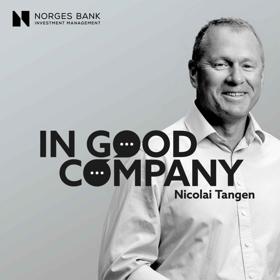
The CEO of the largest single investor in the world, Norges Bank Investment Management, interviews leaders of some of the largest companies in the world. You will get to know the leader, their strategy, leadership principles, and much more.<br /><hr><p style='color:grey; font-size:0.75em;'> Hosted on Acast. See <a style='color:grey;' target='_blank' rel='noopener noreferrer' href='https://acast.com/privacy'>acast.com/privacy</a> for more information.</p>
Today I'm here with Tony Hsu. Pretty amazing actually. You came from China really young, worked very hard, did all kinds of jobs. You know, go to Stanford, started, you know, this incredible company, which is now kind of the biggest food delivery company in America. About to conquer the world, made billions, giving lots of them away in philanthropy. I mean, basically, I'm sitting here in front of the American Dream.
What are you? what are your reflections about your journey?
Well, I think that it's impossible to predict how things go for you, you know, as you think about these things, I think it's, you know, as you recounted, that list of experiences, it's only one that can be told backwards, it's not one that. When I was, you know, mowing lawns. And at the age of seven, trying to save up money for Nintendo games or duck hunt or washing dishes in my mom's restaurant. Could I have predicted what would have happened later on? But I think it's just, you know how incredible, you know, things can be if you, you know, put your mind to things, work hard and get lucky.
How hard have you worked?
Probably not as hard as a lot of people, but no, I've been very fortunate, you know. I think that working hard certainly is something that has always really been in my family. I mean, I think this really comes from my parents, right? Both of them came to the U.S. brought me from China to Illinois when I was five. And you know, I really didn't get to see them that much. Not because of neglect or anything, but because they were trying to put food on the table.
We came to the U.S. with $250 in the bank, and my dad was a full-time waiter as he was getting his P.H.D. My mom was working three jobs a day. For, you know, 12 years before. She actually can save up enough money to, you know, practice what she always wanted to do, which was open up a medical clinic. But it took a while for our family to kind of get our foundation and footing in the U.S. But, you know, thanks to them, I got to, you know, really live off of the fruits of their labor and, you know, carve out my own path.
And what do you think it does to ambitions to come from, kind of, you know, to work one's way up like that?
I think it can have multiple effects, you know, I think. Sometimes, when you grow up in a situation where you don't necessarily see a lot of outs or a lot of ways to progress your current situation. That can be somewhat demotivating. But at the same time, I think, you know, it also gives you a lot of independence, you know, when I was a kid, I spent most of the time by myself, right? I learned English by playing basketball and watching TV.
You know, I named myself Tony after Tony Danza, you know, from Who's the boss?
And that you did on your own when you were a kid, at the age of five. That's extraordinary.
Well, nobody could pronounce my name, you know, nobody could pronounce my Chinese name, that is, and so. But, you know, from being independent, you know, early on, you know, I learned both about good decisions and bad decisions, right? And I think it put me in environments where I had to be quite agile, you know, to adapt to whatever the circumstances. I changed schools a lot when I was a kid growing up, because my parents were always trying to progress our economic situation. So that I can attend better schools, I moved probably four or five schools in my, you know, elementary to middle school years.
And as a result, I think of those experiences. It wasn't as if, like. It increased massively my levels of ambition, but it certainly increased the practice at a very young age for independent thinking.
First of all, what do you think it means to change schools? Often we hear that from some various CEOs that they moved quite a bit, they talk about it as helping their agility and so on. What is your view on that?
Well, I think it's pretty tough, you know, to know this when you're, you know, a very young person, but, you know, I guess. Looking backwards, it almost always made you appreciate, feeling like what it meant to be the outsider or the underdog. If you will, right? You're always in the out community before you can become a member of the in community. In terms of, you know, gaining friendship, or, you know, getting privileged to certain circles inside the school. But I think, you know for me, it taught me that, you know, there's value in every interaction, that you can be friends with. People in a school that's known for teen pregnancy, sadly, or a school that's known for gifted children, or everything in between. And I think as a result of that, it just increased the rate at which I learned.
Probably, I don't think I intentionally knew this when I was a child. But whether it was, you know, playing lots of basketball or doing lots of math, you know, I got to play in different spheres. And I think, you know, probably develop in a way that was, you know, quite healthy. It, you know again, showed me the value of interaction, every interaction, that there is a superpower in everybody and to look for that. And I think if you can do that collectively, you can do great things.
What were the important steps before you started at Stanford?
You know, one of the first moments I remember in adulthood is really graduating from college, where my background was in math. I wanted to be a cancer researcher. And so I did lots of work in labs where the work was done at the intersection of mathematics and biology. You know, it was a fairly young field at the time, maybe 20 to 30 years old or something like that. Today, I think it's quite advanced, especially with the recent developments in large language models. Compute AI.
But back then, I think it was just kind of in its inception or its formation. And I thought I was going to do that and pursue graduate studies and all of that jazz. But my world actually 180'd at graduation, where I decided to not start the graduate program in which I was accepted, but instead 180 into a world of business which I had no experience in.
Why did that happen?
Well, in one of the ADMIT weekend activities where you get to visit. You know the lab that you would be, you know, a part of. I realized that, you know, of the four or five students that would be members of that lab, I didn't feel the most committed. And for something that would be a 12-year journey, actually, that would have been a 12-year journey as a 21-year-old. I, you know, made the decision that there might be something else for me now. That was quite scary for me at the time, where I think, you know, for a while, especially in the world of academics. It's a fairly straight laced, well understood set of progressions that you can take into getting to, you know, greater and greater specialties. Where you have to concentrate on an area for a long period of time before you know, you make a large or significant contribution. But for me?
I took, I suppose, at the time, the path less traveled, which was doing something I've never done before. You know, when I joined McKinsey out of college, I remember showing up in the first week in t-shirts and jeans, and I didn't understand what business casual wear meant. I didn't know what Microsoft Excel was, I didn't know what PowerPoint was.
I barely understood the word revenue, you know, my background was more in the intersection of mathematics and biology.
Well, you must have learned, you must have picked this up pretty fast then.
Well, you have, you know, thanks to the awesome teammates and colleagues I had at McKinsey. I did, but but, you know, I think it. What that experience taught me was that, I think, for me to have gotten to Berkeley, which is where I completed my undergraduate studies. That, in many ways, life had already given me so much more than maybe what it's given some other people that I'm going to be okay. And I think that had a pretty formative opinion for me in terms of just something to remind me that it's probably okay to take, you know, more risk. And the fact that McKinsey actually worked out pretty well for me, just, you know, added more confirmation to that bias.
What did you learn at Stanford then?
I think Stanford was a fantastic journey into thinking about actually myself, more so than developing necessarily professional skills. And what I mean by that is, on one hand, I thought it was a fairly, you know, expensive use of time. I don't necessarily just mean in terms of tuition or things like this. But you know, you're sometimes you're most productive in your 20s, and so that was disproportionately expensive years of my career. But on the other hand, you know, the thesis that I had made for Stanford or just for business school, I should say in general, was really to think, you know, what are other types of skills that I want to develop, as well as what are things that you know? I truly would want to go and do? And to take, you know, maybe a little bit of time away from just, you know, working hard every single day to actually go and figure that out.
And the skills that you wanted to acquire there? What were they?
Well, so, you know, when I thought about my journey, a lot of the journey. Whether it's growing up as an only child and then moving around a lot, or moving in high school. From Illinois to California, or even working in a lab, you know, in research most, or as working as an analyst at McKinsey or at eBay. Most of those work experiences were isolated experiences, or very solo journeys, if you will, where most of my contributions were measured by what I individually contributed, right? And I learned a lot by doing, hopefully, what was considered great work. But at the same time, I also learned that great things, you know, get accomplished with teams. And I didn't have that much experience working with other people. Now. Business school, you know, in and of itself, does not offer that.
But, you know, particularly at Stanford, there was this emphasis that you know. Working well with others and figuring out how to motivate. You know, not just people that are similar to you or motivated similarly. The way that I'm motivated. That was a big selling point of the curriculum, and it's something that I still try to get better at every day.
Now then you set up with some friends, what was then Palo Alto and Deliveroo and now Doordash? How do you go up when they are there? Yeah.
So all of us came together because we were excited about local businesses, that's really the motivating theme for each of us. And I know a lot's been told about my background, but if you were to look at the backgrounds of my co-founders and their family histories, you know. They also have experience with small business too. And so the four of us kind of spoke with hundreds of local business owners, you know, some of these people were restauranteurs, others sold retail items.
And it was interesting when we asked them, Hey, show us all of what you do in a day. That when we followed them around. There was this one baker who ran a macaroon shop on University Avenue in Palo Alto, who showed us a booklet of delivery orders. She had refused, which to us was quite surprising. You know, a that you would turn down people wanting to pay you, and b the significance of that decision. Given the fact that she was a one-person shop and that, you know, those orders really were the difference of making payroll or having some extra padded, you know, insurance money, you know, for the business. And so we started, you know, from that discovery, talking to more businesses about this issue, and it was surprising. This was 2013. That, while delivery was not a new idea, that no one in America, outside of pizza places or certain cities like New York City, offered delivery. And that was true in restaurants, and that was certainly true beyond restaurants.
So then you sit down with your mates and figured, Okay, let's start a delivery company.
Well, so there were a few things that we were thinking about, and so we said, okay, well. If our goal is to help local businesses, and we found this discovery, that delivery could be a need. The question is, well, do consumers actually want this product? Because, you know, we live in a very capitalistic market in the U.S. And so a lot of times, business ideas perhaps were not started because nobody wanted them to be started, and so, you know, we wanted to test a few different ideas.
You know, the first is, do consumers actually want delivery from stores that never offered delivery before, you know? Second, would stores actually want to partner with us? And, you know, pay us, you know, to help them get new customers? And three, could we attract and recruit, you know, a group of drivers who would be willing to work for a wage that we could afford? And so that was really how we thought about it.
In many ways, it was a hypothesis of what needed to be true in order to start the company. And then the reason why we chose restaurants was because we thought, well, if. Delivery was going to be the way in which we made a difference for local businesses. And we wanted to build the largest, you know, delivery network with the highest quality and the lowest cost. Well, you need the most amount of order density, and with order density, you kind of need two things you need lots of frequency of activity and you need lots of coverage. So one of these two requirements was an observation we made, and the other was a bet.
So the observation we made was, if you looked across every category of local retail in America, restaurants is the highest count of stores. It didn't at that time have the highest dollar spend. But there's a million restaurants, as an example, versus, say, just, you know, a couple hundred thousand grocery stores as a counterpoint. So that's why we started with restaurants. And the bet would be that if you can start with restaurants, that there would be the most frequency of activity with the most number of stores. That that would generate the most order density, which would make it easier to build the last mile network for any other category.
Tell me about the first order you got.
The first order we got actually happened on a Saturday, January 12th, 2013.
So we shipped paloaltodelivery.com. Okay, this was the most minimal version of a minimal viable product, where in 45 minutes, we built a website with eight PDF menus. There's no way to order, The only way you can order is to call a Google voice number that rang the cell phones of the four founders.
So a customer in Menlo Park actually placed an order, I think the only way he found us, because the order was placed. 45 minutes or so after we launched. The website was literally by typing in paloaltodelivery.com in the browser. Because Google, I don't think, would have indexed our name at the point yet. But he placed for himself an order from Bangkok cuisine, and it was two items it was chicken pad thai and it was spring rolls.
So pretty good, basically.
It sounded delicious. He calls in. One of my co-founders answers, He's in the car with me. I'm in my 2001 Honda at the time.
And we are literally about to drive home from campus, but instead we detour and go to Bangkok. Cuisine. Place a takeout order, bring the order to his house.
So you did it yourself?
We did it ourselves and then we went in. And I was an intern the previous summer at Square, and so I had a lot of these Square card readers at the time. It was this white register product that you can insert into the jack of the iPhone, and so that's how we accepted payments.
What did you feel?
It was awesome, it was in some ways not believable that somehow he found us. We were shocked he found us.
And as they say, with entrepreneurial journeys, you may have this amazing feeling of euphoria when you launch. And then quickly, that's followed by a trough of sorrow. The trough of sorrow followed pretty quickly thereafter, where it wasn't that easy to get the next set of orders for the first few months.
And how did it scale, what happened then?
We effectively were a delivery service at the time for the Stanford campus, so we were still students, you got to remember at the time. And so we're students. We're running the service, so we're taking classes in the daytime.
And at lunch, we would take turns doing deliveries, we would call and take turns dispatching by calling in the orders and then using Find My Friends, the iPhone app. To track where. Each of us four founder drivers we're the only drivers of the service were, and then we would dispatch the orders ourselves. We were the human algorithm behind the scene, and we did this for about four or five months before we applied to Y Combinator.
And we launched officially as DoorDash June 21st of 2013, in the summer 2013 batch out of Y.C.
How many deliveries do you have now per year?
Per year, I believe the last reported number is in the billions.
So, from one to billions.
Yeah.
When you set it up, what was kind of the dream, what was the biggest that you thought could happen to this?
So it's funny you ask that question, because that's literally the question Y combinator asks you in the application, so I wrote the application.
And just to fill you in y combinator, that's Sam Altman's company at one point, right? yeah.
So, Paul Graham, Jessica Livingston and others founded Y Combinator, which is this incubator program in Silicon Valley that helps start companies. Sam Altman To your point, at one point ran YC, today Gary Tan leads YC.
But one of the questions, certainly in the 2013 era, that they asked in the application was how big can this service be? or how big can your product be? How much revenue do you think you'll earn by year seven? Or I think it was some version of the question. And I think at the time, for consumer companies we were studying, achieving $100 million of revenue was a very significant milestone.
And so I just remember writing, doing some sanity math about, Well, today. We launched in Palo Alto, or we operate in Palo Alto. How many Palo altos do there have to exist, and how many orders in each Palo alto do we have to complete? Such that we can generate $100 million of revenue? And that was the math, I remember answering, so $100 million is kind of what I answered.
Thankfully, I was off by a couple orders of magnitude.
But these are things that are hard to predict.
So what are the important milestones from that stage until now?
There were many along the way and I think it really helped that. When we started the company, we did have this organizing framework that was really centered on our audiences, our customers. So we have three kinds of customers, we have consumers, we have merchants. At the time, there were restaurants.
Today, they span all of retail, and then there are dashers, the drivers on our platform, and for DoorDash to work. From day one. We had this belief that it has to work for all of these audiences. It can't just work for one of the audiences or two of the audiences, it really has to work for everyone.
And so that was a nice organizing framework for us to figure out. Okay, great, you made it work at Stanford. Can you make this work in Palo Alto? then can you make this work in a larger area like San Jose?
And how extensible is the service? Can you repeat this in places of all socioeconomic backgrounds and populations? And so that was really the journey, I would argue, between 2013 and 2016. Where we proved to ourselves that a, we can make it work for all the audiences and make a dollar doing it, and b, we can actually launch this in a mainstream way.
And what were the main setbacks?
Oh, there were many.
So did you nearly die during this period sometimes?
Many times, between 2013 and 2018, the company almost always felt broke. And I was singularly responsible for it. Because as CEO, one of my key, or maybe sole job responsibilities, top priority is to make sure we never run out of cash. But it was really hard the fundraising process. I remember there were three years between 2016 and 2018, that's about 1,000 days where I felt like I was wandering in the desert. Asking for money from investors for people to fund Doordash.
And it was.
So what kept you going then?
There's never one answer, I think, because at some point willpower gives out and you need something beyond that. And for us, I think. One of the lessons I learned throughout that journey, and even in some of the tough moments early on in the company's life is that. While you have this grand vision and mission as the entrepreneur, that you're always holding onto, it's really the team that dictates your day-to-day satisfaction. And if you can build a culture where it feels like, yes, you wanna win and yes, you wanna do all the things for the customer. And it feels like you're playing for one another and playing for the team versus just playing for yourself. It's a lot easier to get through whatever the moments are because it's a lot easier to have. At the time, there was about 250 of us go through this together versus just me single-handedly trying to do this on my own. And look, it doesn't mean that there weren't losses, right?
We had a quarter of the team, maybe a little less, but close to a quarter of the team who decided that. Maybe there were greener pastures elsewhere. Because you see the bank account declining every single week. We're a highly transparent, high-ownership company where we report out on numbers, and I understand that. But if you think about the people that remain and stuck with it, and perhaps this is one version of survivorship bias. But for the people that remain, that hung in there long enough and won by building a product. Because we didn't have any access to dollars, so there was no marketing spend or things like this. That had a product that had higher retention and order frequency. So that we can then get lucky enough to get an investor or two to say yes. That group of people, I think, share a bond that is very, very, very difficult, impossible to break.
Now you started with food, and then you broaden out, you now do groceries, you do things, too. What are you? What's the limitations here in terms of what you can deliver?
Well, if you can deliver ice cream cold or pizza hot, you basically can deliver anything. And so that was part of the thesis of again, starting with prepared meals. Not just because of the order density perspective, but also from what you're talking about, which is the logistics capability. So we've effectively built the most sophisticated point-to-point system, where any business can deliver to any consumer, and back, any business can deliver to any other business. And look, there's a long ways to go. I think there's the logistics element to how hard this is as you go from Category A to Category B to other categories. But there's also just organizing the information that's offline.
None of this information exists. We're sitting today in Los Angeles. If we wanted to ask, where's the last parking space in downtown L.A. That's a really important question for dashers who want to be doing deliveries. Or if we wanted to ask, where can we find the last bottle of coke at a particular price point? Very few stores know that information.
And I think, while there's an amazing revolution happening, certainly with large language models online today, there's still so much information that is offline that still needs to be organized and assembled.
You talked previously about wars, you say there were two wars, there is a war on bits, and there is a war on atoms. What do you mean by that?
So I think, if you think about what's happening in technology today, and this is, I think, even true. Beyond technology. We have one world where it's a digital first, or possibly digital only world, where there is a lot of dynamic behavior in the environment. Thanks to LLMS, but also just thanks to a lot of people vying for the consumer's attention. Who ultimately want to be that center point, that digital assistant for your life. And there's a big battle going on right now. But there's also another war where we're talking about physical atoms, where people like ourselves are trying to organize all of the offline information. And we're also trying to deliver all of the products and help local businesses grow incrementally, as well as build their own capabilities for their first party channels. And I think that what's interesting is that there's lots of activity happening in both of these arenas.
And I also think there's going to be over time intersection between the arenas. But I think right now there's so much interesting activity just happening and developments that literally are progressing by the day and by the hour in both worlds.
Now you were expanded outside the U.S. as well. well, you expanded to Scandinavia, you bought Volt, yeah.
Yeah, yeah. Doordash is now live in about 30 countries worldwide, 29 outside of the U.S. And you're totally right. We teamed up with an awesome company called Volt, who is headquartered in Helsinki. So the Nordics.
And they actually. Mickey Cusi, who's the founder and CEO of Volt, actually leads all of Doordash's international efforts.
So how many different experiments are you running?
Well, we run a lot of experiments, but it doesn't necessarily mean that that's a reflection of how many different projects we have. So Doordash has always been a company where the bias for action is the way we solve and settle debates. We don't analyze a lot or debate a lot. We tend to ship lots of experiments, hundreds to thousands of experiments per week, recognizing that most of them will not make it to our audiences.
Most of them will not make it to customers, consumers, merchants or dashers. On the one hand, you can argue that feels really unfortunate and there's a lot of just productive energy going away. But the way we think about it is, it's about how fast we can learn and how fast we can fix things. And if we can do that well, then hopefully we've earned another rung in the ladder of satisfying a consumer. One thing we've learned-.
So how fast can you trial and fail and move on?
Well, I mean, I think with experiments, that can probably happen in hours. But building businesses, you need more than one type of skill. One type of skill we're talking about here is this learning agility and speed of execution and the willingness to try and fail. But there also is, I would say, another side of business building, which is really hard sometimes to keep in conjunction with this willingness to learn, which is the ability to have the patience and the long-term conviction that perhaps the path that we're traveling on is the wrong one, but at least where we're going is the right place. And I think, as the operator, in some ways, you need two management systems.
One that's used to manage something where you have a pretty good idea of where you're going. And you can even forecast with great accuracy the variance along the paths. These might be some of your more scaled businesses, or businesses in which you've surpassed product market fit. And finding efficient ways to grow. That requires a very different set of management techniques than inventing new businesses. Where you want to be stubborn about the vision of where you want to go and what the job to be done for the customer is. But you have to be super creative, patient and open-minded about the path in which you're going to get there. And I think that's been true in Doordash's life.
In each one of the businesses, we have about five businesses now that we operate, but as we think about inventing business number six, seven, eight, nine, etc.
Etc.
Etc.
We have to keep an open mind to have two different systems in which we operate.
So now I work for you and you say, Hey, Nikolai, could you go and check out this thing? I do this experiment, it's a failure. I come back to you and say, Tony, I'm really sorry I've screwed it up there. How do you react?
I would ask, What did you learn? And I think one of the things that is so important to contextualize. As the entrepreneur on a new journey is that there's always elements of skill and elements of luck. And you need both as the entrepreneur. I think that when we were founding DoorDash, we made some good decisions about what to prioritize, how much to bet on. Certain dimensions of how a consumer will judge us versus a merchant, versus a dasher. And there's some points that we scored from the skill category.
But there was a lot of luck around how large these categories could be. Or that if we made certain decisions to invest more in this market versus that market. It's not always something that you get to know in advance, otherwise, it wouldn't be an entrepreneurial journey.
Moving back a bit here, AI and technology, what's the next thing it can do for the company?
I think right now the answer is we don't know, and we're trying our best to learn as fast as possible. So we certainly have been playing with a lot of the advancements in large language models pretty much for the last two or three years. And certainly, it's become even more popularized over that period of time, and we've seen glimpses of a lot of success. Especially as we think about how can we help organize the physical world and build data sets from that? And use AI to understand how to fill out those catalogs?
We've seen AI in other use cases, whether it's helping us with customer support or detecting fraud, there's lots of use cases. And I think the best way to think about where we are is just we're a very small percentage of the progress bar. It's one we're very bullish on in terms of the general technology. But in terms of finding the home run, I guess the mantra we have right now is about making sure that. It's about having enough shots on goal where we don't know the silver bullet.
Answer to your question about what is the killer? Application with respect to some of the advances in LLMS, as it applies to our kind of business. But we're learning quickly.
Who else is trying to organize the physical world the way you are?
Well, I think it's happening in pockets. I think what's so hard about this is that unless it's your mission to grow and to empower local economies. Where you're on this many multi-decade journey, where that is the sole source of what you want to do. I think it's really hard, and that's why I think in the past it's mostly been done in pockets. Some people will organize, I don't know, parts of retail, other people might organize parts of services.
Other people might organize parts of department stores. And I think what's both daunting as well as exciting for us at Doordash is just the enormity of the challenge that we see ahead of us. Where we do want to be both the infrastructure in the physical world for every city we operate in, and we also want to connect every local merchant with every local consumer. And I think doing these things are just it's only two things, but it's going to take many decades.
At the same time, you try to kind of put yourself out of business.
Well, we're always trying to make sure that we're inventing a better product. One of the things that I've learned is that consumers are never satisfied. No consumer is going to remember the fact that we've delivered faster today than a year ago, they're just going to expect us to deliver faster a year from now or even tomorrow, right? And no consumer is going to ever ask us to increase our prices, or lower our selection, or make worse our customer support.
So I think, you know. Instead, I think building the fortitude as well as the team, with the mentality that we always have to invent new businesses. But we also must understand the importance that we always have to keep getting better at the main thing, too, right? And it's like you have optimization on one side and innovation on the other, and they require very different management systems. They also require to hold both of these things in your head at the same time.
What kind of culture do you need at DoorDash to achieve this?
I think you need several things to come together because I'm glad you asked about the culture. That might be the only thing that actually allows you to achieve all of these ambitions and build all of the products, which is, I think it's first and foremost, start with a very high ownership, high accountability kind of culture. Where, if you think about what we do, it's more of a utility service versus an entertainment system, right? So if we mess up and we don't bring you your products, that is extremely disappointing in the eyes of the consumer. That's a lost sale, which is, you know, for a business that might be very thin on margins, and it's a lost work opportunity for a driver. I mean, it really is a reflection of the local economy. The way I see it is. If you think about GDP and where it gets created, most GDP is still produced by the small, medium and large businesses physically inside every city.
And they also these businesses describe the personalities of why we choose to live in Los Angeles or Oslo, or San Francisco, or other great cities. I think in order for that to stay vibrant and true, where we live. In a world where all of these businesses will be successful, instead of a world where there might just be success at the hands of one or two merchants. Then we have to take great ownership and seriousness of that responsibility. I think it starts there.
So now you're talking about accountability and ownership. So here you interview me now for a job. How do you figure out whether I have it?
I don't think there are any magical interview questions. I think most of these things happen through listening than necessarily asking the perfect interview question. I recognize it's a bit ironic because we're talking about this in a podcast, but, for instance, I'll give some examples. So when we talk about high accountability, if I see a senior executive come and the first thing they tell me in the interview is. Here are the five reasons why you should not hire me. That's a very different communication mechanism or choice than someone who just tells me all the wonderful things that they've accomplished.
Something else we look for is this strong bias for action. One of our early builders at Doordash, and he's still someone who works with us. But in a smaller capacity, was Christopher Payne, who was our first chief operating officer and president.
He, I remember, spoke with me on a Friday for about four hours in 2016.
And later that evening, within a matter of a couple hours, basically, he and his 13-year-old son Andrew at the time, 13. At the time. They literally went out and just did deliveries for three or four hours. That's a high bias for action. I didn't ask him to do that, I didn't say, Hey, can you tell me what's wrong with our logistics system?
No, he just went out and did deliveries and figured it out, right? You know, we care about people who operate at the lowest level of detail, because the physical world is messy and everything is an edge case. So, you know, our first, our former CFO, our current president, Prabir Darkar Prabir, shows up in my first interview or conversation, where he brings a 10 megabyte file. That's a model of what our financial projections would look like, you know, for the next five years.
I didn't ask, this was a this was a coffee, it was supposed to be a coffee chat. What turned out, you know, to be a four-hour examination of unit economics, and you know, the progression of, you know, our markets and our performance, right?
We look for people who can hold two opposing truths at the same time, right? So people who are not dogmatic in how they think. We look at people who are great at building teams, so we look at the track record.
That doesn't have to come from an interview. We look at people who have strong followership because it takes a team to sustain in order to win. And so we look at, you know, when people move jobs, for example, you know, so even before the interview, we look at when they move jobs, how many people literally follow them. And, you know? So these are some of the things we call them. The attributes of excellence that we look for in building a culture that, I think, you know, can meet the demands of what we're trying to do at Doordash.
This ability to get people to follow you, or being a talent magnet is key here. Why do people want to follow you? What is it that you have as a leader which makes it attractive to work for you?
Well, I think you should ask them.
I mean, I already would love to work for you, so you've got me already lined up here.
I think you should ask them, Nikolai. But look, I think one of the things I always believe, and I told you this at the onset of our conversation today, is that. I believe that everyone has a superpower and it's my job as the leader to get it out of them and give them the maximum exposure for that superpower. And I hope that superpower, that exposure will always be at Doordash, right? I hope that to be true.
But even if it's not true and it has to be somewhere else, I think, you know, maximizing someone's strength is really, really important. And so I think one of the things that people have appreciated when they come to DoorDash is that it's a place that sets a high bar, you know, for achievement and excellence. And I think, you know, people who are very motivated tend to be motivated similarly. It's a place that, you know, is very rigorous and maniacal about the outcomes, but we are very flexible in how we get there. It's a place that bets on people, perhaps before their resume has achieved maybe the credibility to deserve or warrant that job opportunity.
It's a place that is willing to take. You know, risks. Sometimes that's time risks, sometimes that's financial risks, sometimes that's operating risk. And I think, you know, all of this sums up.
It's a place where we are trying to make you the best version of yourself. And hopefully, you know, one of the aspirations I always have had at DoorDash is it's not to just make you successful at DoorDash. That's great, but really, if you know if we are successful as leaders at Doordash. If you know the day that you left Doordash and decided to do whatever you know happened to be next for you. That you are so confident that you can achieve, you know, that scale of ambition, then we've done our job.
What is your superpower?
Sometimes I'm still trying to figure that out. But I think one of the things that I find a lot of joy and spend a lot of time on is spending time with people that have more talent than they do. Experience and identifying those people early, but also giving them exposure in the right ways. So that means that you don't just, you know, give them maximum exposure, and just, you know, let them sink or swim. But, you know, giving them the right amount of support while pushing them, you know, to the edge. So that they still have their confidence, so that they can achieve the next level much faster than they otherwise would have.
You are on the board of Meta, you know Facebook, basically, what are you learning there that you have taken into your business?
I think sometimes one of the hardest things to keep up as you become more and more successful. And when you talk about Meta, you're talking about, you know, a family of apps, right? That are used by more often than you know any other products in the world. And you're talking about audacious bets in AI, in reality labs and building, you know, the next ecosystem. I think to see that constant drive, despite all of the success it already has achieved, is astounding. Because it means that the company has an enormous willingness to fail. If you think about it, they're still trying to invent new things, whether it's in AI or in the metaverse. And some of these ecosystems, you know, certainly are not here yet, some of which might be many years away.
To have the willingness, I think, to perhaps go against the wisdom of the crowd to do that, to have the courage of their conviction to do that. Both in the new as well as the existing, you know, the family of apps with Facebook, Instagram, WhatsApp and many other fantastic products. I think that's super inspiring and I think it's, you know, it's a great, almost like, look forward for me and I think others. Where you can see both management styles of running scaled businesses and inventing the new. You know, the other thing I've learned is just how great the leadership team at Meta is at building the next generation. You know, Meta is a company that largely, not entirely, but largely has been built from within. In terms of mentoring and giving the opportunities. You know, across the board, across various products. And I think, you know, that also is something that resonates quite a lot with how we think about talent development at DoorDash.
How do you relax?
I love to exercise.
And I heard you do a Norwegian kind of exercise regime.
I've tried, I've tried. It's called the Norwegian 4x4, which is one of the most proven exercises scientifically to increase your VO2 Max. Although I would say it's a difficult workout and I wouldn't recommend it if you've never ran before, that's not the first exercise I'd recommend for you.
But, you know, for me, I really believe in routines as a way to find balance, and normalcy. Or imbalance may not be the right word. But to integrate my life in my work, right? And so for me right now, and routines can change, you know, your life circumstances can change. I started Doordash as a single person. I was dating, but you know, now I'm married with two kids and my life is very different from, you know, 10 11 years ago.
Right, and so now my routines are, you know, continuously exercising. still, I still exercise every single day. For me, that used to mean, you know, running, and a lot of it was distance running.
Today, that's shifted and morphed into other types of sports, whether it's weight training or jujitsu, trying new types of sport beyond just running.
What do you read?
I try my best to keep up in reading, although that's been a bit light recently. I try my best to read books every month, one book a month, where I'm a big fan of nonfiction. So I read history, yeah, a lot of history. But a lot of it is different from my wife, who is an exclusive reader of fiction, so we don't really have overlapping, necessarily reading interests, but....
And what kind of history do you read?
What do you find useful? You know, one of the things I like to, I love to read about real people, you know? I think one of the things is, I truly believe that life is more interesting and entertaining sometimes than fiction. I think some of these things you just cannot invent.
Well, tell me some of the real people you admire or have read about.
Well, there's a lot, you know. And so I don't want to necessarily single out any particular leader. But I've really enjoyed histories and biographies around military leaders or different wars that have been started. Or the study of industries, or the study of businesses. That more is not necessarily a business school, per se, textbook, but more a book, actually about the business and the people that are at the beginnings of that company. And trying their best to not, you know, tell the story backwards, but really to tell the story from the perspective of when things were happening. And I think it just goes to show you how incredible humanity is.
When are you going to write the story about Doris?
Probably not anytime soon, but look, our story is still evolving. We're a 10-year-old company and so I can't believe it, on one hand, that it's been 10 years. On the other hand, I still remember the apartment in which, you know, my co-founders and I built the company out of.
What is your advice to young people?
How young are we talking?
We are talking 20.
I think one of the things I would say is to be proud of the person in the mirror. I think that sometimes young people get thrown lots of advice, you know, from their parents, from their friends, from social media, from the news. And it's really easy to get lost in the wind. I was almost that way. And what I mean by being proud in the mirror is to figure out what are the things that make you. You know who you are, what is your superpower.
What are the routines that describe you such that you feel like work is not work that you would do? You know this for free? Or that the type of people you enjoy spending time with, the people that give you energy, the people that replenish you. And look, it doesn't get figured out overnight. I'm still trying my best to figure this out. But I think sometimes the world's advice isn't about being proud of the person in the mirror. It's about chasing, you know, some shadow, or finding the next exciting thing to be excited about.
And I get that topically, like, I'm super curious about lots of different things intellectually, but I think you know the ways to build strategy, whether it's for your life or for your work, is. You kind of have to bet on the things that don't change. And I think one of the things you have to bet on is to figure out. What are the things that you're, you know, truly, you know, that were really gifts given to you that naturally make you, you know, really excel at something. And I think, if you can do that and figure that out in terms of what it means for your personal life, I think you're going to live a very satisfied life.
Well, Tony, you should be really proud of the person in the mirror and this has been a really well conversation with me.
Likewise, thanks Nikolai, thank you so much, all right.
Thank you.
Appreciate it.
v1.0.0.260408-1-a910ba6_os