

"Paul Simon"
2023-10-09 00:59:11
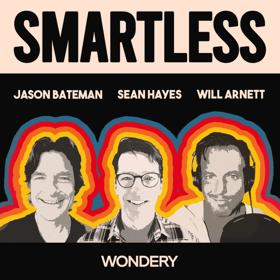
<p>"SmartLess" with Jason Bateman, Sean Hayes, & Will Arnett is a podcast that connects and unites people from all walks of life to learn about shared experiences through thoughtful dialogue and organic hilarity. A nice surprise: in each episode of SmartLess, one of the hosts reveals his mystery guest to the other two. What ensues is a genuinely improvised and authentic conversation filled with laughter and newfound knowledge to feed the SmartLess mind.</p><p>Listen to SmartLess on the Wondery App or wherever you get your podcasts. You can listen to episodes early and ad-free on Wondery+. Join Wondery+ in the Wondery App, Apple Podcasts or Spotify. Start your free trial by visiting <a href="http://wondery.com/links/smartless" rel="noopener noreferrer" target="_blank">wondery.com/links/smartless</a> now.</p><p><br></p>
Hey. Hey, Sean. Are we rolling? Do we have speed? Yeah, we got speed.
Sean, were you going to say something? You were holding up a bottle of water. I was going to say, is anybody thirsty? I got some water. Yeah, well, how can we?
None of us can enjoy it. You can hear it, so maybe it'll do the same thing as drinking it. Gargle it real quick. See, can you gargle right now and say welcome to Smartless in a gargle?
Oh, my God, Scotty. This is all over him. Scotty. Scotty, get the towel. Scotty, get the towel.
Welcome to Smartless.
Smartless.
Smartless.
Smartless.
Wait, Sean's back in LA now? Yes. Oh, since when? Last night, or yesterday. Since last night.
Pay attention. Oh, Sean, I knew it was soon. I knew it was soon, but- I know, I'm so excited. Sean, how does it feel? Baby angels come back to the nest.
There's no such thing as baby angels, and then they grow up and get older. Everybody's a baby angel. A baby angel. Will, said to me last week, he goes, you know, you're gonna get sick. And I said, what?
Yeah, you're gonna get sick. Yeah, right, when you get home, you'll get sick. And I'm like, why would you think that? And boy, I don't feel sick, but oh, my God. Sean.
My body doesn't know, it's not over. No. So you're going to probably just power down for about a week? No, just a couple of days. Sean, you've been up here.
You have been working at this high level every day, getting yourself up to this thing every day, for months and months and months and months. Is it possible that your body, like you're right, because I told myself, I'm not gonna get sick. I'm not gonna get sick. I can't get sick. And then now I'm just like shutting down.
My body's, like, yeah, I'm shutting down too. Yeah. I don't know. Yeah. And what about just your instinct to perform and entertain and be charismatic and have presence and whatnot?
Why start now? Yeah. Do you just sit on the couch and Scotty's like trying to have a conversation and you're just like, no, not until October. No talkie-talkie anymore. I saw this interview, all bits aside, with Miley Cyrus the other day.
And she was talking about how hard it is, how she doesn't like to tour because she creates this. It's too demanding. It creates this sort of bloated ego because she has to get ready to get up. And then her relationship with the audience is being the observed. And then the audience is the observer.
And what she has to do to create that, she says it pulls her away from herself, her true self. And she becomes something else. And the more she does it. I mean, I'm kind of paraphrasing. But it made a lot of sense.
And I get that, Sean. Every night you're up there. Yeah. It was a lot. But it was very rewarding.
I'm sad and glad. at the exact same time that it's over. I get to see you guys. I'm real excited, whether you guys like it or not. Well, I hope that you're giving yourself the attaboy that you deserve and feeling a sense of pride and accomplishment.
Yeah, thanks. And, I mean, the accolades are public. So it's unanimous. But also just sort of privately and internally over there at the show, I'm sure that you were also like Tony Award level leader and creating a nice environment. And you should pat yourself on the back for all that.
Well, thanks. It was easy. Everybody was great. Well, here's what Sean said to me the other day, which I really related to. And he said, you would love the bits that we do backstage, nonstop.
He's like, I do it almost just for that. And I totally get that, Jay. You know that feeling of like just being there and fucking around in the bits. We used to have that on a thing that we used to do years ago. And we've all had it.
We've shared it together. It's the bits. It's the fucking around. It's the crew you work with and the cast you work with. And then the product you push out to the public that you never meet is fantastic.
But it is a very intimate process, right? Yeah. I used to do, I would do this bit right before I entered in the show, where there's a little platform, where the door is. You need to step up on the platform. And I pretended I lost all my faculties, like five seconds before I entered.
And I took both my hands and lifted one leg out of the platform and the other. Then I lifted my arm onto the door handle.
And then my cue was like right there. And then you come out. Give us, give us, give us. Yeah, yeah. I tell you what, though, I'm really excited, speaking of bits, to get into our guest today, because he has so many bits to his life that each one of them individually kind of add up to this incredible, each one of them is incredible unto itself.
And then, when you look at it, what he's done in its entirety, it's truly, it's epic. I don't want to embarrass them. All the bits put together. Yeah. And I don't want to embarrass him.
I've never met him and I'm in awe of the fact that he's here today. He's a musical and an American icon, for lack of a better word. We've listened to, here's one of the most amazing things. He's sold millions and millions, over a hundred millions of records as a part of a band. And the same amount as a solo recording artist for the last 50 years.
And he's done, he's sung incredible songs that you know, that are such a part of your life at different stages. Paul Simon. That are part of your parents' lives. Yeah. You know what, Jason?
Is it Paul Simon? Frederick Simon, yes. No way. Yes. Are you kidding me?
Holy shit. There he is. Oh my God. Wow. Wow.
What are we doing? I know. We don't deserve this. I know. Good morning.
Good morning. Good morning. Paul, when I was, this is like so stupid, but, and you get this every day of your life, but when I was a kid, I listened to two albums over and over and over and over again. Yours was the Bridge Over. Troubled Water was one I memorized.
And that's when they had the lyrics on the jacket. And so I memorized all the words to every song, Baby Driver, like all those songs. And then, and the Nutcracker, but that's neither here nor there. But I memorized every single word. I've just been, it's wild to meet somebody, I've never met you, whereas we talked about this before on the show, where music is actually something that penetrates a person's soul and DNA and it stays with you forever.
And you're one of them. for me. That's pretty wild. I know the feeling because we toured with the Everly Brothers once, and I had the same feeling about the Everly Brothers. I couldn't believe that the Everly Brothers were actually in our show, you know, and they were completely oblivious to how important of figures they were in my life.
But you know what about music? It's not, it's not, of course. it's true that it penetrates deeply, and we all have this powerful, powerful memories enhanced by music. But isn't it also so that it's like somewhere really at its zenith, between like 12 and 16 years old? The stuff that you hear then, maybe a little earlier even, that is what you love for your whole life.
So it must be that there's something really intense about our senses in that age. I guess that's not a revelation. That's when I listen to it. It is a revelation. Well, it's not, but it is.
It does seem like those are the years in which you kind of, you open up and you grow up and you start to kind of come alive and have a sense of yourself that's separate from your identity as a child of your parents. You have an identity. You start to under, you start to see the world, I think through different eyes, a little bit, 12 through 16.. And yeah, so all those things hit. and Sean, I'm with you.
Like I, as I was sort of in anticipation of talking to you today, I went back and I've been listening to so much of your music over the last few days. And it, once again, kind of, it, took me back to very vivid places in time. Riding in the car with my dad, you know, just being a kid, and it makes me emotional now, even thinking about it, because I can feel that connection. Yeah, yeah. And that must be, to be, and for you to say that you had that same feeling with the Everly Brothers is amazing.
I guess the question I have for you is, do you, when people come and say these things to you and talk about the importance or where you fit into their lives, their lives, what kind of, what is that relationship like for you? What does that do to you as a person? You know, I don't,
I understand that, of course, because, as I said, I felt it myself, but as far as thinking about myself in the way that others think about me, I don't, I don't think that way. I don't find it helpful. It's a distraction to think, oh, I, whatever. It's like. you were talking about Miley Cyrus before I revealed myself.
And is that in the show, what you were talking about? Yeah, yeah. It was? Yeah, yeah. And she was talking about, you were talking about her, thinking about her relationship to the audience.
I don't think about that, because I find it, I find it a distraction to, to be in the audience at the same time as I'm on the stage. So I think, when I'm performing, I'm just interested in listening to what other musicians are playing around me and fitting in in the most musical way that gives me the most pleasure, and interpreting the songs that I choose to sing from my repertoire in a way that makes them still be, you know, accurate or, you know, relevant to my life, because I'm sure you'll all, you'll all understand this. Once you have to say a line many times, and for a singer, if I'm going to sing the Sound of Silence again, I have to have a reason to sing that, or I'm just a Paul Simon cover band. So, you know, what's the good of that? Does that mean?
like, if you were to perform Sound of Silence, let's say tonight, you would look to sort of channel a current feeling that you have or something that you're thinking about in your life currently, and apply that to the song and give that the context of the song and the lyrics as you sing it tonight? Yeah, maybe if that would work. Or it depends, as long as you're concentrating. If I concentrate on the interpretation of the song, the phrasing, it's almost, I don't know, you know, I don't want to go into, fall into a cliche, but I am about to. It's almost like a little bit of a Zen exercise.
You have to find something to concentrate on so that you're not doing it by rote, and then it's of no value. And I also believe that the audience wants to see you do that. Yeah. They really don't want to see you do the same performance by memory. They won't.
And I think that they can sense whether you're doing it sincerely, whatever the sincerity is based on, or whether you're doing it. They want to see you feel it like they're feeling it. Yeah. And then, well, I always say this too, about songs. The listener completes the song.
I write a song, you hear it, you heard the Bridge Over Trouble Water album. And what was the song you picked out? You said... Baby Driver? Baby Driver.
So that's interesting. So here's a whole album. It was the album of the year, and Bridge Over Trouble Water, the song, was the most popular song in the world that year. But what you remembered was Baby Driver, which is interesting, because when we made the album, we weren't thinking that Baby Driver was... I wasn't thinking that Baby Driver was going to be...
I didn't know what it was going to be. I'm not surprised that you picked that or any other one. And the same goes if I said, well, what's the lyrics of Baby Driver? Well, I will. I will say that to you.
Just give me an example of the lyrics. And they call them Baby Driver, and I'm gone. Okay, good. Let's stop. Sorry.
They don't... You have... No, it was a group... I hit the road and I'm gone. We say that a lot to Sean.
It was a really good performance.
That's what I'm going to take from this. show, your performance. But what you said... What you said, Sean, was... And they called them Baby Driver.
And they called... Yeah. And they called her or him or something? They called me Baby Driver. They called me Baby Driver.
But you remember it as... And they called them Baby Driver. So, which is just as interesting, a line, actually. Yeah. Sean, you were saying yesterday that you loved their song Sound of Quiet.
Because that's how you remembered it. The sound of quiet. By the way, it should be known, I just have to... While we're on the sound of silence, I have to bring this up because it's kind of crazy. Jason, you'll remember this.
Sean, this is news to you. Jason and I worked on a project over the course of many years. And we had a moment when we were in the fourth incarnation of this project we were working on. We're in the middle of a strike, Paul, so we're not naming anything. And in this project, the camera at various times would push in on me, my character, as I was having these sort of existential moments and of sort of fear and doubt and confusion, whatever.
Introspection. Introspection. They'd play Sound of Silence. And it would push in, and they licensed the song for this program. And they'd push in on my face.
Da-na-na-na-na-na-na. Hello, darkness, my old friend. And it happened about six or seven times during the series. Sounds very expensive. I know, it was very expensive.
My favorite being this one, and it ended up becoming a meme. that they did with Ben Affleck for a long time, starting like 2016.. But there was a great one. At one point, all of a sudden, you hear the music start up and my character says something, it pushes in on my face, and you hear... Da-na-na-na-na-na-na.
And you see a mariachi band go behind me with their trumpet. And they go, oh, it's not us. And then the camera stops pushing in.
Anyway, just to say that that song has had a huge impact on my life. Hey, Paul, on the licensing thing, does every single request for licensing for stuff for music, television, commercials, anything, does it get directly to you or does that go to your manager? Does it go to your label? I mean, do you have hands-on on who gets it and who doesn't? Well, it doesn't anymore, because I sold my publishing company about two years ago.
Well, it was a mix. Partly good and partly not good. But before that, when it was up to me, kind of, sort of went to management and they would filter out some requests. that's totally inappropriate. You know, you can pick any kind of inappropriate combination you want.
But otherwise... Yeah, if it was some sort of a clamp for your nose for getting rid of snoring, they probably wouldn't get you the request for sound and silence. Right, for sound and silence. I would say, yeah, that's right. Well, I would say, just out of curiosity, how much are they?
Of course, always. Not going to say yet, but just out of curiosity, how much for the nose clamp on sound and silence? To the extent you're comfortable, can you elaborate on what the good and what the bad was of selling a catalog at the risk of getting into the weeds? Yeah, sure. The good part about it is none of my children are interested in running that company or managing that company.
You know, so... And I wouldn't want them to. I can understand. It's not of interest to them. So there's no use to leave it to them because they don't want it anyway.
And then they'll just... So. that means they'll go and sell it. So I'm better off selling it now and giving them the money rather than holding on to it. That's the good part of it.
The bad part is you actually sort of lose contact with the thing that's part of you. Yeah, yeah, yeah. It's weird. It's a little bit... Put it this way, it's good financially, and psychologically, it's a tiny bit of a wound.
You know? Yeah. It's like a divorce, probably, or something. No. Okay.
And we will be right back. It's all a light-hearted nightmare. on our podcast, Morbid. We're your hosts. I'm Alina Urquhart.
And I'm Ash Kelly. And our show is part true crime, part spooky, and part comedy. The stories we cover are well-researched. He claimed and confessed to officially killing up to 28 people. With a touch of humor, I'd just like to go ahead and say that if there's no band called Malevolent Deity, that is pretty great.
a dash of sarcasm, and just garnished a bit with a little bit of cursing. This mother-.
lied.
Like a liar. Like a liar. And if you're a weirdo like us and love to cozy up to a creepy tale of the paranormal, or you love to hop in the Wayback Machine and dissect the details of some of history's most notorious crimes, you should tune in to our podcast, Morbid. Follow Morbid on the Wondery app or wherever you get your podcasts. You can listen to episodes early and ad-free by joining Wondery Plus in the Wondery app or on Apple Podcasts.
Nancy's love story could have been ripped right out of the pages of one of her own novels. She was a romance mystery writer who happens to be married to a chef. But this story didn't end with a happily. ever after. When I stepped into the kitchen, I could see that Chef Brophy was on the ground and I heard somebody say, call 911.
As writers, we'd written our share of murder mysteries, so when suspicion turned to Dan's wife, Nancy, we weren't that surprised. The first person they look at would be the spouse. We understand that's usually the way they do it. But we began to wonder, had Nancy gotten so wrapped up in her own novels There are murders in all of the books. that she was playing them out in real life?
Follow happily, never after Dan and Nancy on the Wondery app or wherever you get your podcasts. You can binge all episodes of happily, never after Dan and Nancy early and ad free right now by joining Wondery Plus. Hey, it's Guy Raz here, the host of How I Built This, a podcast that gives you a front row seat to how some of the biggest products were built and the innovators, entrepreneurs, and idealists behind them. Every week I speak to someone new, stories like Justin Wolverton's, a lawyer who just wanted a healthy alternative to ice cream. So he created Halo Top in his Cuisinart.
Or Todd Graves, who grew his fried chicken restaurant Raising Canes into one of the most successful fast food chains in the U.S. All of these great conversations can help you learn how to think big, take risks, and navigate crises in life, and work from people who've done all of that and more. Follow How I Built This on the Wondery app or wherever you get your podcasts. You can listen to How I Built This early and add free right now on Wondery Plus.
All right, back to the show. You know, Paul, I remember that one sketch you did on this one sketch show. It's very famous now, and it has to do with what we're doing to you, which is everybody, you're standing in line to get into, like a movie or something. Oh, yeah, it's a very famous. And they say something like, I'm going to get this wrong, but, like, you know, hey, Paul, I played in your band a lot.
Do you remember me? No. Hey, Paul, I was like, you know, I was a friend of yours back in high school. Do you remember me? No.
And then somebody, it builds up to the last person going, Paul, I was sitting on a little red rug in the middle of Central Park, like about 10,000 feet from you, during your live concert. And you're like, Jim, how are you?
It's so great. That was funny. And it was such a, it's such a, that was funny. Speaking of Central Park, is there any chance that you'll ever play Central Park again? No, there's no chance that I'll, I don't think there's much chance that I'll play again.
No. Because, well, I don't,
well, I'll just say it and get it over with. I lost the hearing in my left ear about a year ago. It's just about one year now. Oh, I'm sorry. And I can't, I can't hear when drums and electric guitar are playing.
I can't sing with it. I can't hear my voice in the mix. So I can't perform with a band. I might be able to perform this piece that I did, Seven Psalms, which is just acoustic guitar. I'm going to try that next month, with two guitarists playing the parts that I wrote.
And see if I, because I think I can handle that much sound. But more than that, no, it's blown me out. It's a drag. Yeah, I mean. I'm sorry.
No, that is a drag. But anyway, you can't play Central Park. They don't want anybody to play in Central Park. And I think I'm the reason too. Why?
The concert that I did there in 1991 had, by the police estimates, 750,000 people. Jesus. I think there was just so much damage done to Central Park from just people walking over the Great Lawn that they've restricted concerts there. And when they do have them, they restrict the size. So there won't be any of those events like the Simon and Garfunkel concert.
And also it took up a lot of valuable space from drug dealers and pimps and stuff. They had to move to different areas. Let me just... Paul, I wanted to talk. You mentioned Seven Psalms, which I just think is pretty remarkable.
I just listened to it. And it's hard to... I was like, you guys haven't heard it yet, I don't think, but it's sort of part song and part album. It's kind of one... And forgive me, Paul, if I'm not doing a good job of describing it.
It's like one long piece, it seems like. And it starts with these, what I think are bells, and then kind of ends with the bells as well. Am I right in that, Paul? Almost. It is a long piece.
It's a 33-minute piece. And it's meant to be played in its entirety. But the sounds that you heard as bells, they do sound something like bells. They're actually an instrument called a cloud bowl that was invented by a composer named Harry Parch. And Harry Parch is kind of a very interesting cul-de-sac composer.
He said the division of an octave into 12 notes, if you look at a piano, and you start with C, and you play to C, and you include the white and black keys, you have 12 tones in an octave. He said that's a European conception, that an octave is divided into 12 tones. It's arbitrary. Actually, he thought it was divided into 42 microtones. So in order to play the music that he heard, which was divided into these 42 notes in an octave, he had to invent instruments that could play in that small of an interval.
Wow. And one of the instruments that he invented was this cloud bowl, which was a picture of a wine glass that's maybe three feet in diameter and another three or four feet high, hung upside down, and you hit it with a mallet, and it produces that tone. You'll cut all of this out because it's... No, no, are you kidding? It's only interesting to musicians.
But it does start with those... If you're using all of those tones that are in the middle of the chromatic scale, then how would that blend in with any chord? It would just sound so dissonant. It does. If you blend it with tonal music, it's going to sound dissonant, but it doesn't necessarily have to sound dissonant in a way that is not pleasing.
For example, if you're playing, whatever, your keyboard, or you're composing or you're making something, and in the distance you hear a church bell ringing, and maybe in another further distance you hear a second church bell, the sound of those two bells, they don't make what you're playing sound less interesting. They probably enhance it. There's something about those overtones that we really like, and I think that's maybe what Parch was on to. But in this piece, Seven Psalms, I use a lot of different bells and percussion instruments that are not really in the key, but they enhance the acoustic guitar. Have you ever heard of the German term Klangfarben music?
No, I haven't. What's that mean? It's kind of what we're talking about. It's an overall term. that means, you know, it's more color in a song rather than within a chord.
It's just for atmospheric kind of feeling. Well, that term applies to Seven Psalms. There is a lot of that to create a certain atmosphere, and in the same way that I said, oh, the listener completes the song, I believe that when the listener listens to things, if you give them a certain sound and you place it just far enough so that they can just hear it, it creates a depth in your hearing, and that depth, just like, if you imagine, the church bells in the distance, there's something about that that opens the listener, or maybe I'm just speaking for myself personally, but I think, I'm not, I think it's true, for a lot of people, there's something about these distant sounds that open us up emotionally, and if, as a writer, a songwriter, if I can produce sounds that allow the listener to open themselves emotionally, then whatever it is that I have to say lyrically has a chance of being really meaningful. Of landing. Yeah.
And of really, right, you've laid the groundwork for them to really absorb the lyrics. It's interesting to hear you talk about it in this way. I'm fascinated, and listening to Seven Psalms, it is a really remarkable piece in that I feel like albums are often meant to be heard in their entirety, at least they used to be, and this kind of, in a lot of ways, forces you to listen to it as one piece, because it is kind of one continuous piece that's made up of all these different peaks and valleys, and it occurs to me, listening to you talk about it and talking about people and really how important, actually, the listener is to you, I really believe it. now more than ever, has that changed or evolved at all? When you started first making records or recording, I mean, before you were recording with, I guess you had been recording with art, but you recorded a lot of stuff and had some hits on your own under different pseudonyms, like Jerry Landis, I think, was one of the names you used, and you had a bunch of different names.
Oh, when I was a teenager, yeah, but none of that were hits. No, but you had a few charts, but did you always have that approach, this approach to music, and it just got more refined, or when was it that you started to really understand, or, I don't know? Yeah, understand is right. When were you cognizant of... I think what I had, naturally, I think, was this understanding, but I didn't intellectually think of it.
So when I was 23 years old and I wrote The Sound of Silence, I didn't think anything other than that's probably my best song up till now. You know, I didn't think about anything. It's only later, and maybe in the last 15 years or something like that, that I begin to think, why do we like this sound? What is it about this song that makes me love it and remember it from all the other songs that were happening at the same time when I was, you know, of that age, when I was really receptive to music. And if I were to just throw the question back to you on a comedic level, if you're setting up a comedic environment where what you can do is going to achieve what you want, which is to get people to laugh and also to think, that's true.
I'm laughing, but I also know that's really true. It's part of my enjoyment, is that, well, in order to do that, I mean, you can do it when you're young, you do it naturally. And later on, you think, why is that? Why is that funny? What do I need to do?
that? And a lot of it has to do, I think, with attention span of the listener or the viewer. So I think a lot about attention span, because my attention span, well, it is what it is. So at a certain point, when I'm writing, I think, oh, I'm tired of this. It's time for me to change a pattern.
Maybe change a rhythmic pattern. Maybe change the key that I'm in. Maybe change whatever. My attention span is saying that I'm bored and I'm about to bail out. That's what I think the listener does.
all the time. You listen to most music or most comedy, and if you're not drawn into it, if you're not hooked, you're leaving. You're mentally leaving. And with a comic, if they're not funny, for a long enough period of time, and that might be a minute and a half, maybe it's five minutes, whatever, you're not, that set is blown. You're not gonna, you're gone.
Same with a song. A big component to comedy is surprise and lack of predictability. And you do that, I would think, without even trying. There's nothing predictable. There's nothing boring about your music.
In fact, you're constantly changing your sound and things just become even more sort of sophisticated and layered. And I'm not sure what the right words would be, but it never seemed common. I mean, in all the decades you've been making music, and in fact, there was something very, very human and vulnerable and connecting to the real deep and small part inside of me always. And can you attribute that sense of... By the way, JB, kind of to what you're saying, and maybe you can put this in, think about all the different types of music, of the world, music that Paul got into and all that stuff.
I mean, and all that still spoke to us, even though it was different. My response to that is it's not different. They put a name on it and call it world music, but I thought, I don't see why any of this is different from any other piece of popular music that I like. And I thought that way, going back into the Bridge Over Trouble Water album, which has a song called El Condor Pasa, which is like a 400-year-old Peruvian, maybe it's 200, 300-year-old, it's an old Peruvian melody, and it's lasted that long. I heard it performed in Paris in 1965 by this folk group, and I loved it.
And I thought, oh, I really love that. Why not, why can't I write a lyric to that? I'll just get the permission from the people who recorded it, and I'll put a lyric onto it. The same is true with Mother and Child Reunion. It's not like I said, oh, I'll do this because it's reggae.
No, I just like, I like that sound. It didn't sound incompatible with other music, sounds that I liked. And if you go, I guess I'm, in a way, by my age, I'm privileged in that the music that I listen to, that I fell in love with, which is in the 50s, is really world music. I mean, you have, as I said, the Everly Brothers. Well, that sound is Appalachian music.
You know, those harmonies, and those harmonies are Celtic. They come from Ireland. They come from England. That's that sound. Doo-wop comes from gospel quartets.
Those gospel quartets from the Black Church, that's another culture. Elvis Presley is combining country with rhythm and blues. Music from Louisiana is being, is syncopated because it's drawing from rhythms that come up from the African diaspora of the drum. It's coming up through the Caribbean, finds its way into Louisiana. That mixes with French accordion and fiddle music and becomes zydeco.
All of these were put together. They were all hits in the 50s, and they just called it rock and roll. I was 13 years old, and I just thought, it's all the same music. What do you attribute? your, I mean, your taste is not common.
You never seem to write a common song or put up with something that is easy and commercial. What do you attribute your taste, your confidence, your sophistication in music? Did your parents encourage you to like stuff that's a little bit more challenging, or is it just the bands, as you said, that you ended up falling in love with as a kid, and then that just identified and built your taste? My father was a musician, and I would say he didn't like the music that I liked. There was a huge division between his generation and mine.
He loved music from the big band era, and that's what he probably grew up playing, and he wasn't interested at all in rock and roll. So, no, he didn't encourage me or give me any of that. Well, I guess he did, but I wasn't interested. You know, like,
he loved classical music. He loved Mahler. You know, and I remember him playing. as for me, not when I was a kid, but, you know, when I was, like already in my 40s or something, maybe early 50s. He said, this is what I love, this Mahler's Fifth.
So I listened to it, and I thought it's so, it's inexplicable why people love what they love, but I don't love it, but he does, and so anyway, no, they didn't have anything to do with it. But you said something that was interesting, Jason. Oh, boy.
We probably marked it because it's so rare. We're going to circle the day. I was just basically asking, you know, what can you attribute your non-common taste to, and your confidence in always putting out something that never sounds the same as the last? Okay, so, why, let's go to the confidence thing first, okay, because I don't have confidence. I don't.
I don't buy it. I think, I quite often think this is no good, you know, but then I say to myself, it's just a distraction to think this is no good. It's not improving anything. Just go ahead and do what you feel, you know, and, by the way, it takes a battle to get rid of that voice that says this is no good. That's no good.
That's no good, you know. We all have it. We all have that, right? Yeah, yeah. So, I don't really have confidence.
What I feel is, it's like people used to say at a certain period of time, when I was writing hits all the time, oh, you have your finger on the pulse and I would think my finger is out there and the pulse is running under it at the moment, but it's going to, the pulse is going to leave, but I'm still going to have, I'm still going to be exploring with my finger to see where I want to go. Sometimes I'm going to go to a place that's less well known, like South African music, and many, many people will say, oh, I love that and they'll agree with me. and then sometimes I'll go to a place that's like a combination of Latin music and doo-wop, like what I wrote in The Cape Man, which was a musical that I wrote for Broadway, which was a gigantic flop. Critically, commercially, everything. And no, nobody was interested in what I was thinking.
So, really, what can you do other than just to go to what you're interested in? Because if you decide you're going to go and see, now, I wonder what people are interested in, and I'll go and do that. You'll just fail. You'll never get it right. and if you do get it right, well, then you're, if you do figure that out, well, then you're not an artist anymore.
It's hollow. It doesn't have any heart. and if you believe that it's essential to have heart, then you discard that as a choice. and if you don't believe in heart and you're just interested in success, well, then you pursue another path towards success.
We'll be right back.
And now, back to the show. Did you ever get close to pursuing acting even more than you did? Because you're fantastic at it. You seem very, very comfortable at it. You know, I have some skill set in doing comedy.
I don't think I could do any other kind of serious acting. And play anything other than myself. I couldn't, I couldn't submerge myself. Paul, that's not surprising to me, because you brought up comedy before and there is a connection there with music and comedy, because they're both about rhythm, right? Yeah.
At their core. And I think that there's, you guys feel the same, tell me the same thing. You know, over the years, I've met so many bands who are really, really into comedy and I know so many comedians who are really into music. As you guys know, I'm a music nut. I'm like an absolute, and I think that that's a natural sort of correlation between the two.
It is. There's a, musicians are very funny. Yeah, they can be. Musicians really, really like to laugh, and some of the funniest people that I know are, are, are musicians. And, you know, as funny as any professional comedians.
So yeah, there's a, there's a connection there. There are many connections between comedy and, and music. Timing, attention span,
pitch, you know, I mean, think of, they used to call him the beast. Do you know who I mean? Sam. Sam Kinison? Yeah.
Yeah, Sam Kinison? Think of his, think of how he made people laugh and the volume level that he was at that he used as a comedic device. And then think of someone like Steven Wright, you know? So, so volume. Yeah, there are a lot of connections.
I mean, I also found a great affinity with painters. Some of my close friends were painters, and the way they thought about how they resolved issues on a canvas was not very different from the way I thought about resolving questions that were song questions. And you know what? I mean, Joe Torrey is a friend of mine. Oh, wow.
And so is Bernie Williams. Wow. These, the way they think about baseball and hitting, it wasn't any different from the way you guys are thinking about comedy, and I'm thinking about music. It's like, all of it is connected. Actually, Paul, that's interesting, because Bernie Williams is also a guitarist.
Isn't he a musician as well? Yeah, very good guitarist. Good musician. You sound like a Yankee fan. We won't torture you and talk about this season, but there's always next year.
Yeah, let's not bring up the subject this year. Jason, why would you even mention it? He's a huge baseball fan.
You know, it's amazing. Go ahead. Go ahead. You talk. You're the guest.
I was just going for a second into how much I like baseball and think about baseball. You know how much of my identity has to do with baseball. I play guitar right-handed.
But I throw and I bat left-handed or I kick a football. I'm ambidextrous. But sometimes, if I go to, as an exercise, go to a really, really pleasant memory from childhood, go there as a meditation. A lot of them are baseball memories. And it's always Yankees, never Dodgers?
No, no, it's not me playing. No, Dodgers, no. I went to a Dodger game once when I was nine. My grandparents lived in Brooklyn and they took me to Ebbets Field, but I wore a mask because I didn't want, I did not want to be associated in any way.
Wait, can I, Paul, can I read you this quote? maybe you remember this quote from Donald Fagan. Do you know the quote I'm going to say about baseball? No, I don't, but I know Donald, but go ahead. Apparently he said that, he described you as a certain kind of New York Jew, almost a stereotype really, to whom music and baseball are very important.
I think it has to do with the parents. The parents are either immigrants or first-generation Americans who felt like outsiders, and assimilation was the key thought. They gravitated to black music and baseball, looking for an alternative culture. And apparently, upon hearing his description, you said that it isn't far from the truth.
Uh, yeah. I'll stick with that. Is there a question in there? No, no, I was just wondering. I just wanted to say that.
Are you a, I would imagine, and I'm sure you're going to say yes, just out of politeness, but I would imagine you'd be a pretty big Steely Dan fan. Yeah. Yeah. Steely Dan is a very musical band. Both, both of those guys.
Well, it's only Donald now. Yeah. Those are one of my favorites. Do you, do you feel like, do you still feel when you get up in the morning, or right before you go to bed, or whenever you felt like when you were younger writing songs, do you still feel the same urge and pull? Like if something inspires you, do you run and grab your guitar or sit at the piano or something like that to get it out before you forget?
Or, or do you, are you just like, you know what, I'll get to it when I get to it now? Well, now going to Seven Psalms, that idea came to me in a dream. A dream said, I can't remember whether it said you are working on a piece called Seven Psalms or you should write a piece called Seven Psalms. And it was such a strong dream that I got up and wrote it down. I don't, I don't usually, although I did the other day, actually write something down.
Now, it's good that I do, because otherwise I forget. But just because you wake up from a dream and write something down doesn't mean it's any good. Yeah. In fact, a lot of the stuff that you think up in your dreams is no good at all. Right.
Especially funny stuff. Paul, have you ever been approached or been curious or interested in scoring movies? Dude. Yeah, I am. I was going to get to it.
I haven't been approached too often, but yeah, I am. I like it. I would like the challenge of it. All right. Here.
come a bunch of... Well, Jay, remember he... Jay, remember he... Oh, sorry. I want to get into the movie thing because he worked with, obviously with Mike Nichols back in the day.
Yeah, Mike asked us to do the, you know, to do The Graduate. Yeah. Well, I was a big fan of Nichols and May. Yeah, for sure. Were you guys fans of Nichols and May?
Oh, of course. Oh, of course. Yeah, yeah, yeah. Massive. You know, it's a...
Here's a question for you. It's an interesting dividing line. You know, you can find it in music, but you can find it in comedy too. There are certain comedians that you love. It's like when you all...
When I said, are you fans of Nichols and May? You all say, oh, yeah, of course. You know, of course. Yeah.
But that line, I wonder what that line means, because if I said, did you... Were you a big fan? Were you all a big fan of Red Skelton? Mm-hmm. Yeah.
See, there are different kinds of humor, right? Yeah, one's reality-based, one's broad. Yeah. Oh, that's interesting. I never thought about how you would...
What the different humor is. But your humor, you know, when you were talking about how you would never want to be a dramatic actor, I was going to say that your humor is very... I'd love to be a dramatic actor if I had the ability, but I don't. Yeah, but I'm here to tell you that you're doing it already and your brand of comedy is very reality-based. It's very sort of...
Yeah, it's dry. You're not performing. You're not thrown into the back row. You're kind of in it and real and grounded, and that's a certain kind of humor, right? It's Woody Allen humor versus Mel Brooks humor.
Both great, but completely different. And I don't... Mine would be, the first comedic thing that I remember that I fell in love with was Bob and Ray. Did you ever hear of Bob and Ray? No?
I've heard of them, but... Oh, well... No, I don't know Bob and Ray. Oh, well, you should do that, because that's like... Yeah?
It's like me saying, did you ever hear of Louis Armstrong? You know, if you're a Miles Davis fan... I can't, I'm drawing a blank. That's the guy who landed on the moon, Will. Either way, that's exactly what I thought.
Well, Bob and Ray, they were very deadpan. It was... By the way, Paul, you're not referring to Bob Ray, the former NDP premier of Ontario, right? Is that an actual guy? Sorry.
Oh, yeah, I mixed it up. Lorne knows who Bob Ray is. Lorne probably does, yeah. No, well, you guys are in for a big, big treat. when you rediscover Bob Elliot and Ray Goulding.
They were incredible. I heard them on radio. I used to hear them in the morning before I was going to school. I guess my mother used to like them. But it was the same kind of sort of school, not exactly because they were verbal, all verbal, but it was Jack.
Benny would be out of that world. It was a very dry kind of deadpan humor. Which is a very close cousin to dramatic acting, you know, because you're not winking. You're trying to be real. You're not being goofy and winking to the audience.
Nobody hates a wink more than Jason. No one hates a wink more than me. You're going to learn that. I get hit for it. I think, for, you know, I was having, not to be a name dropper, but I was having a conversation with Jack Nicholson once.
Jesus Christ. Oh, Paul, it's so tacky. Yeah. I'll tell you my biggest name, drop story, in a second. But I was having this conversation with Jack Nicholson.
And what I remember out of it was he said, at this point I could play anything and get it right. I could play my mother and get it right. So there's, for great actors, they have an ability to become something. I don't know how they do it. It seems like magic.
It's like musicians where you say, how do you, how'd they do that? Where'd that come from? It's a, it's really a gift. It's not, it's a great gift for those, you know. What's your, what's your biggest name?
drop story? My biggest name, drop story is, and it's not going to, it's not going to be what you think. Cause it's, it was, I was, I was talking to the Dalai Lama. It's, that's not the name. Okay.
That's still pretty big on it. But he said to me, he said, you know, I remember Mao Zedong once said to me,
That's the best one. I could give you John Lennon, but I cannot, I cannot give you Mao Zedong. That's the best one I've heard. That's amazing. That's pretty good.
Listen, I feel like we could talk to you all day. I do, I do want to mention, because I think it's, it's interesting to me and I don't know if it, if it resonates or if there's any connection here, that hearing you talk about music and playing when you were young and you were saying your dad had no influence, but I know that your dad was, because he was a musician, it sort of laid the groundwork for that to be part of, okay, to be part of your life, or maybe how you got into it. And then now I listen to seven Psalms, and your, and your wife, whom you mentioned is Edie is also participates on seven Psalms. And I'm like, you've had a lifetime of making music and being around people who are family and people whom you've known forever.
And what a great, again, I don't know if there's much of a question there, but does that resonate at all with you? Well, it's a great privilege to make music with people who whose music you respect. No. So I'm, I, I'm married to, to a really, really great songwriter and singer, Edie Brickell, and she's, she's, she sings two duets with me on, on the seven Psalms. But again, you know, to go back to like these choices about how, where, you know, why would, how did you think of doing this thing or that unusual thing?
It's about musicians. Like. it was strange for a little bit to be playing with musicians from South Africa, but it was just a little while. And then everything became just about the music. And then every, it all blended, everything blended in and the differences evaporated.
for the moment. They never really go, completely go away, but, but yeah, it's a cliche, but music is the universal language. It's true. Paul Simon. My gosh, I could listen to you.
It's such an honor for you. Taking some time to talk to us. It's such a pleasure to meet you. Thank you so much. I enjoyed it too.
Thank you, Paul. All right, guys. Thank you, Paul. What a pleasure. Thank you.
Have a great rest of your day. Thank you. You as well.
So you guys cool with me bringing Paul Simon on? Yeah. Do we owe you any money for that? I mean, what the hell? I mean, I used to, you know, the la la la.
Is that the boxer? Is that that song? Yeah, I think so. I think that's right. I used to run around as a kid.
By the way, I love the la la la.
Right?
Yeah. La la la la.
I used to pretend like I was doing those sounds myself with my hands. Sure. As a kid. Oh, really? With your hands?
Yeah. All alone in the backyard. Oh, the sweet baby angel in the baby angel backyard. Mama, turn up the boxer. I wanted to recite the lyrics to Baby Driver on his way out, but I forgot.
I mean, they're so. Do you know? Do you remember the lyrics to Daddy Driver? Yeah, I guess you do.
It was really fast.
Will, can I, how do you, is it through Lauren that you know Paul? No, I don't. I don't know him at all through Lauren. And I just, I, I mean, they're very good friends, but I just, we just reached out and, you know, it's one of those kind of a long shot and you just hope that he responds. That's so crazy.
You know, he's kind of like the, you know, one of those icons where, when he came onto the show just now and you're looking at him, you're like, wow, all those songs came out of his head. So, nuts. Dude, I was going through, like I said, I was going through it and I kept going like, oh yeah, 50 ways to leave your lover. Yeah. Oh yeah.
Bridge over the Trevor water. Oh yeah. Sound of silence. Yeah. And like all this stuff he did, you know, he had, he had.
Homeward bound. Remember, homeward bound. Number one albums as albums, as both a band and a solo artist, and number one singles as a band. And so do you know how fucking rare that is? I know it's so rare.
And my, you know, and Franny, 16 years old, she's listening to all, she's discovering, hey, have you heard this song? Have you heard that? I'm like, oh, my God.
Yeah. So it brings me back to when I was a kid. I know. I love him. I love that you've got him.
Well, it was so cool. I could have asked him, like, you know, so many questions. I didn't want to bore him. I, you know, you always find yourself. At least I find myself when somebody like that comes out, like him or Paul McCartney or something, you want to ask him all the fan questions, but you don't want to be a jerk about it.
Yeah. You know? Yeah. I found myself like, like Jay, you did too. Like, you're like, not really a question, but I just want to say.
Exactly. Hey, I like you. I like the way you did that. It was. so.
That's how I felt. You know? And you know what it made me think about? This is, this is on what he was saying about, it's kind of off topic on this, but he was saying about the Jack Nicholson thing and Jack Nicholson saying, and, by the way, I obviously, I think Jack Nicholson, one of the greatest actors ever. Certainly.
Film actors. Amazing. I'm a massive fan. And he was saying that he could play his mother. at this point.
He could do anything. And I thought, yeah. And you know what part of it is? It's kind of like what Paul was saying about the music lays the groundwork so that the lyrics could then land. You buy that credibility.
And I think Jack Nicholson has bought so much credibility over the years, culturally. So we know who he is. So if an alien came down from outer space, they might not appreciate him playing his mother or doing something insane. the way that we would go. Yeah.
But it's Jack Nicholson playing this, because we have a built in thing where he's laid 50 years of work on us. He's built so much bank with his audience. Yeah. He's built 50 ways to leave his lover. Yeah.
You know what. one way to leave your lover is? Just go bye.
Bye, loser. Bye.
That was a left hook bye. Smart. Left.
Smart. Left.
Smartless is 100% organic and artisanally handcrafted by Bennett Barbaco, Michael Grant Terry, and Rob Armgirf.
Smart. Left.
If you like Smartless, you can listen early and add free right now by joining Wondery Plus in the Wondery app or on Apple podcasts. Before you go, tell us about yourself by filling out a short survey at WonderyPlus.com.
v1.0.0.260408-1-a910ba6_os